
Notice: I receive compensation if you buy something through affiliate links on this post. This does not change the price you would pay. As an Amazon Associate I earn from qualifying purchases.
You mixed the dough.
You waited.
You checked the bowl again.
Maybe it softened a little, but not enough to trust.
Bulk fermentation can go wrong without obvious signs, and some doughs rise less than you expect.
Once you know what the dough is doing, the next step is easier.
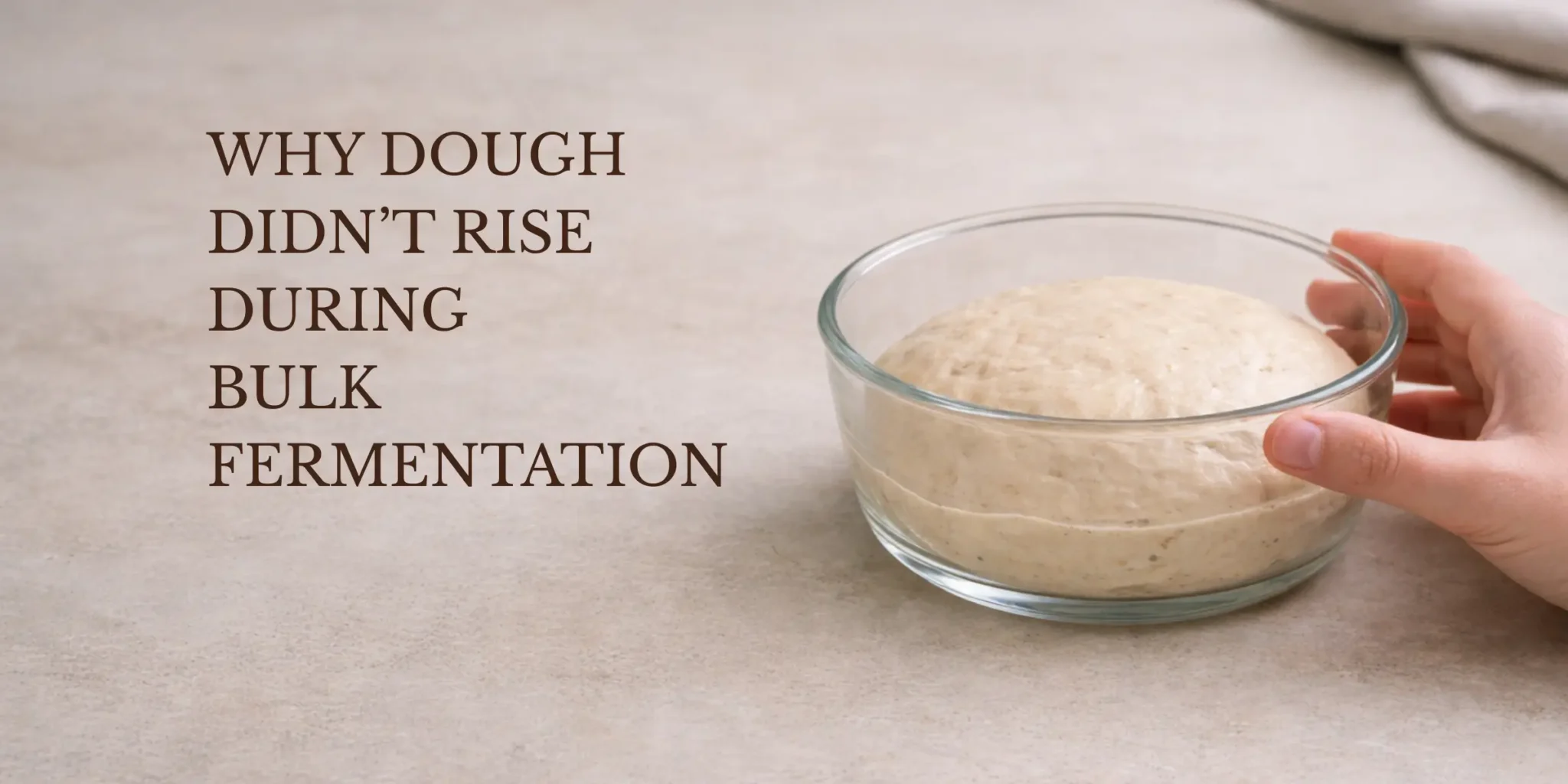
Bulk fermentation is the first rise after mixing, before shaping. If your dough didn’t rise during bulk fermentation, the cause is usually one of these:
Fast Diagnosis: Why Dough Stalls During Bulk
If your dough didn’t rise during bulk fermentation, the cause is usually one of these:
- the dough is too cold
- the yeast or starter is too weak
- the dough needs more time
- the dough is fermenting, but the change is small
- the dough has already started getting weaker
Each one needs a different fix. So before you change anything, inspect what changed in the dough.
Before you try to fix the dough, compare what you see in the bowl to these bulk fermentation patterns…
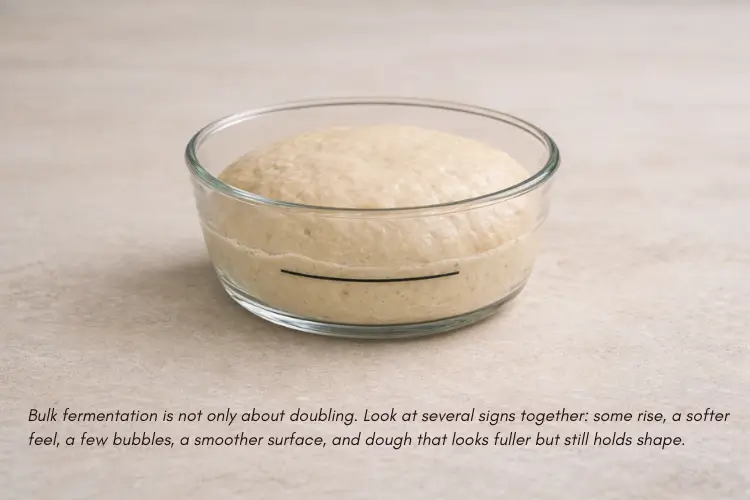
Table of Contents
- 1 Dough Not Rising During Bulk Fermentation: Too Early vs Truly Stalled
- 2 What Healthy Bulk Fermentation Looks Like
- 3 What Usually Causes a Stalled Bulk
- 4 Can Bulk Fermentation Be Too Long?
- 5 Why Dough Feels Sticky After Bulk Fermentation
- 6 Bulk Fermentation vs Proof: What Changes After Bulk Ends?
- 7 What to Do Next If Your Dough Didn’t Rise During Bulk Fermentation
- 8 The More You Observe, the Easier Bulk Gets
- 9 FAQs
Dough Not Rising During Bulk Fermentation: Too Early vs Truly Stalled
When dough looks flat during bulk, ask: Is it early, or is it stalled?
The dough looks almost unchanged
If the dough still looks close to how it looked after mixing, it may be too early, too cold, or too weakly fermented to show much change yet.
A dough that has stalled shows very little lift. The top still looks flat or dull. You do not see many bubbles along the sides or underneath. When you pull up a piece, it resists stretching, snaps back quickly, and still feels dense.
If you see those signs, check the dough temperature first. A cool dough can sit for a long time with very little visible progress, even when the formula is fine.
If your dough didn’t rise during bulk fermentation, do not blame the yeast first. Check how warm the dough is.
King Arthur’s guide to desired dough temperature explains why dough temperature changes fermentation speed so much.
The dough looks slightly puffier, but not doubled
This can be normal. Many doughs do not double during bulk.
Cooler doughs progress slowly, and some sourdoughs show a smaller rise even when fermentation is going well.
Look for a little lift, a smoother top, a few bubbles, and dough that feels softer when you press or fold it. If those signs are there, the dough may be fermenting normally even if the rise still looks modest.
The dough looks looser, wetter, or flatter instead of stronger
This is a different problem.
A dough can sit long enough to soften and spread without gaining enough strength to hold the gas it made.
It may spread outward faster in the bowl. It may cling more to your fingers or scraper. When you lift part of it, it may stretch, sag, and slump back down instead of holding a rounded shape.
At that point, handle the dough gently and check whether it still has enough strength to shape. If the dough is spreading more than it is lifting, the dough may already be weakening, and waiting longer may make that worse.
What Healthy Bulk Fermentation Looks Like
A healthy dough after bulk does not always look dramatic. You are looking for visible change in height, surface, and feel.
Signs that it is fermenting normally
A dough that is fermenting usually shows a few changes at once.
It has lifted some in the bowl, even if that lift is modest.
The top looks smoother and slightly rounded instead of flat.
You may see bubbles at the sides or just under the surface.
When you move the bowl, the dough may wobble slightly.
It also feels softer and less compact.
It may be tacky — lightly sticks but releases cleanly — instead of dry or rough.
It still holds its shape when you gather it or fold it.
King Arthur’s guide to bulk fermentation signs shows what healthy bulk looks like.
Signs it is still early or underfermented
An underfermented dough shows very little visible air.
It has not lifted much yet. The top has not rounded much.
You do not see many bubbles.
When you pull or fold part of the dough, it resists stretching and snaps back quickly.
It feels dense instead of lighter and more inflated.
That usually means one of three things: it is still early, the dough is cold, or the leavening is weak.
Why “double” is not the best rule
Not Every Dough Doubles During Bulk
“Double in size” is a rough shortcut, not a rule that fits every dough.
A warm, softer dough may rise faster and look more dramatic. A cooler or stiffer dough may ferment normally with less visible lift.
Instead of chasing “double,” ask:
- Has the dough lifted some?
- Has it softened?
- Are a few bubbles showing?
- Does it still hold shape?
If you are also wondering whether the dough had enough strength before bulk even began, this guide on how long to knead dough with a stand mixer can help you tell a mixing problem from a fermentation problem.
What Usually Causes a Stalled Bulk
Once you rule out “too early,” the cause can be a cold dough, weak leavening, or dough that never built enough strength early on.
Cause 1: The dough is too cold
Cold dough ferments slowly.
A cool room, cool water, cool flour, or a cold bowl can leave the dough colder.
If the dough feels cool, shows very little lift, and still resists stretching and snaps back quickly, give it more warmth and more time before you change anything else.
Cause 2: The yeast or starter is too weak
If the dough has had enough time in reasonable conditions and still looks sleepy, check your leavening.
Old yeast or poorly stored yeast may no longer be active enough to raise the dough well.
With sourdough, the starter may have looked ready, but still been too weak to raise the dough well.
The dough may soften a little, but it will not build much lift, many bubbles, or a fuller shape.
This guide shows what a ripe sourdough starter looks like.
Cause 3: The dough never built enough strength early on
Sometimes the problem starts before bulk.
If the dough is undermixed, it may not trap gas well once fermentation begins.
That means the dough can soften without lifting much, because the structure is not strong enough to hold gas.
If that sounds familiar, go back to how long to knead dough with a stand mixer. Weak fermentation and weak dough strength can look similar in the bowl, but they are not the same problem.
Can Bulk Fermentation Be Too Long?
Yes.
A dough that seemed to ferment slowly can still overferment if it sits too long.
A dough that has fermented too far often spreads more in the bowl instead of lifting more. It may cling more heavily to your hands or scraper.
When you lift part of it, it may stretch, sag, and collapse back down more easily. The surface may look less rounded and lose.
This does not always mean total collapse. But it does say the dough is getting weaker, not stronger.
If that dough later bakes up heavy, flatter, or tighter than expected, the finished loaf often looks a lot like the loaves in this guide to dense bread.
Bulk problems do not stay in the bowl. They usually show up again after baking.
Why Dough Feels Sticky After Bulk Fermentation
A dough that feels stickier after bulk is not the same as a dough that felt sticky from the start.
Fermentation softens dough as it fills with gas and relaxes.
Warmer dough feels softer and often stickier in your hand. Higher-hydration dough does too.
So a dough can feel more tacky or sticky after bulk and still be normal. Look at how it behaves when you lift, fold, or gather it.
Sticky After Bulk Is Not Always a Problem
If the dough lightly sticks but releases cleanly, still gathers into a mass, and still holds shape for a moment, it may be fermenting normally.
If the dough clings to your skin, pulls strands when lifted, and spreads quickly instead of holding shape, something else is going on.
If you want help sorting that out, this guide on why dough feels sticky explains the difference more clearly.
And if you need practical bench fixes, this guide on how to fix sticky dough walks through what to do next.
Bulk Fermentation vs Proof: What Changes After Bulk Ends?
Bulk fermentation and proofing are connected but are separate stages.
Bulk happens before shaping, when the whole mass ferments together.
Proof happens after shaping, when the dough is finishing its rise before baking.
Problems that start in bulk often show up later during proofing or baking.
An underfermented dough often struggles to proof well.
A dough that overfermented in bulk may be too weak to hold its shape well.
Either way, what happens during bulk shows up later during shaping and baking.
Hydration can make bulk harder to judge because softer doughs often spread more and cling more, even when fermentation is normal. If that keeps tripping you up, this guide on dough hydration explains why.
What to Do Next If Your Dough Didn’t Rise During Bulk Fermentation
Once you know what the dough is doing, the next step gets easier.
If the dough is cold and has barely changed
Warm it up before you change the formula. Move it to a warmer spot. Let it bulk longer. Check the dough temperature if you can.
Many times, the dough is not dead. It is just cold.
If the dough shows some bubbles and feels softer
Keep fermenting. Do not chase “double.”
If the dough has lifted a little, feels softer, and shows some bubbles, fermentation is happening. Look at the whole dough, not size alone.
If the dough is spreading, sticking more, and losing shape
Do not assume it just needs more time.
Waiting longer can weaken the dough further and lead to a denser loaf. Handle it gently and check whether it still holds enough shape to be shaped cleanly.
If you want to add more yeast
Stop and check the real problem first.
Yeast that’s added halfway through does not distribute evenly, and it changes the dough in the middle of the process.
Adding more flour just because the dough feels loose can make the loaf heavier and tighter later.
If you keep mixing up softness, stickiness, and spread, revisit dough hydration before your next batch so the dough is easier to judge from the start.
The More You Observe, the Easier Bulk Gets
Watch the dough, not just the clock.
Most bulk fermentation problems start small: the dough stayed cooler than expected, the starter was weaker than it looked, or the dough changed less than you expected.
When you start looking at lift, softness, bubbles, and shape together, bulk stops feeling like guesswork.
A little early.
A little cold.
A little longer than planned.
Those are small shifts, not failures. When you learn to notice them, bread baking gets calmer.
Mix it. Bake it.