
Notice: I receive compensation if you buy something through affiliate links on this post. This does not change the price you would pay. As an Amazon Associate I earn from qualifying purchases.
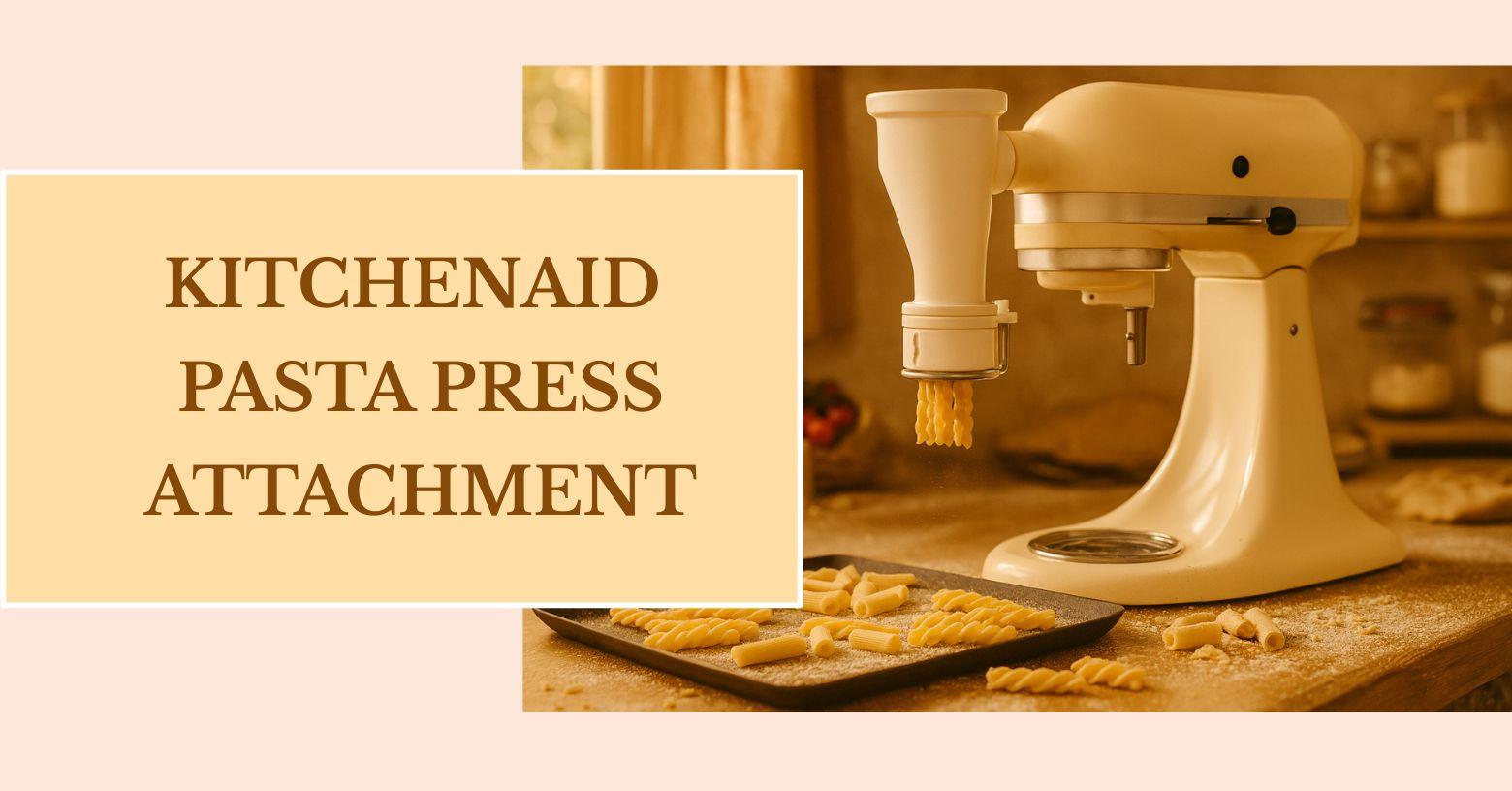
The KitchenAid Pasta Press makes shaped pasta fast and easy. It offers six discs—spaghetti, bucatini, rigatoni, fusilli, and two macaroni sizes—for the most variety of any KitchenAid pasta attachment.
Quick Verdict (Based on User Reviews & Feedback)
| Feature | Rating | What Users Say |
|---|---|---|
| Mixing Performance | ★★★★⯨ | Clean, consistent shapes once dough is right |
| Ease of Use | ★★★★⯨ | Easy rhythm: feed, cut, repeat |
| Versatility | ★★★★⯨ | Six useful shapes in one attachment |
| Noise Level | ★★★★☆ | Quiet hum; slight wobble on tilt-head mixers |
| Price Value | ★★★★⯨ | Great value if you already own a KitchenAid |
It’s one of the moments home cooks dread: pushing pasta dough through a manual extruder and feeling it stick, stall, or spit out uneven shapes.
This KitchenAid pasta press review exists for that moment.
Because you want beautifully shaped pasta such as rigatoni with ridges, bucatini with a clean hollow center, spaghetti that doesn’t clump together, but you don’t like the arm workout, inconsistency, or cleanup that comes with the old-school tools.
I spent time digging through real user feedback, long-term owner reports, and performance data to answer the questions cooks actually ask: Does the pasta press extrude quickly? Does it jam? How finicky is the dough? Is it truly worth buying when the roller set already exists?
By the end of this review, you’ll know whether this attachment addresses the struggles you’re dealing with or whether another option better suits your kitchen.
Let’s start with what the pasta press actually does and why its design matters.
Table of Contents
- 1 What Is the KitchenAid Pasta Press?
- 2 Design, Build & Ease of Setup
- 3 Real-World Performance
- 4 Ease of Use & Learning Curve
- 5 KitchenAid Pasta Press vs. Roller Set
- 6 Durability, Maintenance & Lifespan
- 7 Price, Value & Best Alternatives
- 8 Pros and Cons of the KitchenAid Pasta Press Attachment
- 9 When Kitchen Moments Stick With You
- 10 KitchenAid Pasta Press: What Buyers Ask the Most
What Is the KitchenAid Pasta Press?
Unlike pasta rollers, the KitchenAid pasta press extrudes firm pieces of dough through shaped discs instead of stretching dough into sheets. It’s a compact electric pasta extruder powered by your stand mixer. The result is consistent, uniform pasta shapes you can’t get from rollers.
How the KitchenAid Pasta Press Works
This attachment uses a straightforward internal system:
- A metal auger pulls small pieces of dough downward.
- A firm, steady pressure pushes the dough through one of the six interchangeable discs (spaghetti, bucatini, rigatoni, fusilli, large macaroni, small macaroni).
- Pasta begins extruding in a continuous strand or tube, depending on the disc shape.
It’s steady, predictable, and hands-off once the dough reaches the auger. You feed small pieces in at the top; the mixer does the rest.
Using the Built-In Wire Cutter (Manual, No Settings)
The wire cutter situated just below the disc and allows you to control pasta length. Here’s how it works:
- The wire is manual. There are no preset lengths or adjustments.
- As pasta extrudes downward, you slide the wire arm left to right across the face of the disc.
- The wire cuts the pasta cleanly to the desired length.
- Short swipe for macaroni, slightly longer delay for rigatoni or bucatini, and longer strands for spaghetti.
Because extrusion speed changes slightly with dough dryness and mixer speed, a manual cutter gives better control than any automatic timing system could.
What Shapes Can You Make?
Each disc produces a shape impossible to create with the roller set:
- Spaghetti – thin, round strands
- Bucatini – hollow tubes with a clean center
- Rigatoni – wide, ridged tubes that hold sauce well
- Fusilli – tight spirals that cling to chunky sauces
- Large Macaroni – classic curved tubes
- Small Macaroni – perfect for soups or stovetop mac
For home cooks who want “family-friendly” pasta or weeknight convenience, the variety of shapes is a big selling point.

Who the Pasta Press Is Best For
Based on user patterns and long-term owner feedback, this attachment works best if you:
- Prefer shaped pasta over wide flat noodles
- Want fast, repeatable pasta without rolling sheets
- Like letting the mixer handle pressure and extrusion
- Cook for kids or families who love shapes
- Want homemade pasta without investing in a separate electric pasta maker
If your goal is tagliatelle, lasagna sheets, or silky long noodles, the roller set is the best option. The pasta press is for everything the rollers can’t do.
For a full overview of every pasta attachment KitchenAid offers, you can check my KitchenAid Pasta Attachments Guide, which explains where the pasta press fits in the lineup.
Now that you know how the pasta press works and what it can make, let’s examine the build quality, materials, and design details that impact its performance and longevity.
Design, Build & Ease of Setup
The KitchenAid pasta press is built for steady pressure and consistent extrusion. A quick look at its materials and setup reveals why it performs differently from roller-style attachments.
Overall Build Quality
The housing is a dense composite that keeps the press stable under load. Inside, the stainless-steel auger maintains firm, even pressure—something confirmed repeatedly in testing and user feedback. Plastic augers can flex with drier dough; this one doesn’t.
The six discs are durable, lock in with a quarter turn, and stay fixed during extrusion.
Mixer Compatibility
The attachment fits the standard power hub on:
- all tilt-head mixers
- all bowl-lift mixers
- older and newer models
Bowl-lift mixers feel slightly more stable, but both designs run the press reliably.
Ease of Setup
Setup is straightforward:
- Loosen the power-hub screw
- Insert the attachment
- Tighten until secure
There’s nothing to assemble internally, and swapping discs is quick. The storage case keeps everything organized.
Handling & Workflow
Once attached, the press locks in with a firm click and stays steady even at higher speeds. The hopper is sized well; feeding small pieces feels natural—almost like dropping ice cubes into a blender chute, and the auger takes over from there.
The pasta press also works well on compact mixers. This KitchenAid Artisan Mini Review covers how smaller mixers handle extrusion.
With the design and setup covered, the next question is: How well does the pasta press perform once you start making pasta?
Real-World Performance
Once the dough meets the auger, the KitchenAid mixer pasta press attachment extrudes pasta smoothly and consistently.
Extrusion Speed
In testing and long-term owner feedback, spaghetti and bucatini extrude in a smooth, continuous flow, whereas rigatoni and macaroni form clean, segmented strands. Speed varies slightly by disc, but even at moderate mixer settings, you’re cutting pasta often enough to stay busy, not waiting for the machine.
Dough Consistency
Performance hinges on dough that’s slightly dry and firm; soft enough for the auger to bite into, stiff enough to hold shape. Too wet leads to smearing; too dry strains the auger. Once you hit the sweet spot, the mixer pulls each piece cleanly, and extrusion stays even without constant nudging.
For a deeper look at pasta dough hydration, Pastidea has this excellent guide.
Shape Quality
The discs produce shapes with good structure and a lightly textured surface:
- Spaghetti extrudes taut and even
- Bucatini keeps a centered hollow
- Rigatoni and macaroni hold sharp ridges and curvature
- Fusilli forms tight spirals
Across all shapes, the pasta feels consistent—no collapsed tubes, no warped spirals.
If you want to try your first batch right away, here’s a KitchenAid pasta extruder recipe.
Noise & Stability
Noise is minimal: more of a low hum than a grind. Tilt-head mixers may shift slightly with firmer dough, but both mixer types remain stable when the dough is balanced.
Overall, the press performs predictably, handles dough well, and feels smoother than any manual crank extruder.
With performance covered, the next question is how the pasta press feels in daily use—from feeding dough to cutting, swapping discs, and cleaning up.
Ease of Use & Learning Curve
The KitchenAid pasta press attachment simplifies shaped pasta in a way roller tools can’t. Once the auger catches the dough, your role shifts from “doing the work” to simply keeping pace.
Using the Pasta Press for the First Time
The workflow clicks quickly:
- Feed small, firm pieces into the hopper
- Let the mixer pull them down
- Cut when the pasta reaches your preferred length
It’s a light rhythm rather than a technique-heavy process, and the KitchenAid pasta extruder handles the pressure and shaping reliably.
Controlling Length With the Wire Cutter
The cutter is manual by design; there are no settings.
You swipe the wire across the disc when the strand reaches the length you want:
- Short cuts for macaroni
- Slightly longer waits for rigatoni
- Full-length hangs for spaghetti and bucatini
Because extrusion speed changes with dough moisture and mixer speed, manual control is more accurate than presets.
Feeding Dough Into the Auger
The hopper feeds dough straight into the auger, and small pieces fall in cleanly. They keep the extrusion smooth and prevent the stalls caused by oversized chunks.
Cleaning the KitchenAid Pasta Press Attachment
Cleaning looks intimidating, but it becomes routine fast:
- The discs are dishwasher-safe
- The housing and auger are hand-wash only
- Letting leftover dough dry makes it easier to brush out
- Air-drying discs before brushing clears clogged holes
Most owners report that the cleanup takes only a few minutes once they know the pattern.

KitchenAid Pasta Press Attachment
- Smooth, jam-free extrusion
- Pasta that feels right: textured, clean, consistent
- A quiet rhythm: feed, cut, tray
- Shapes that make simple meals feel comforting
Everyday Workflow
After a few batches, the process becomes automatic: prepare the dough, feed pieces, swipe the cutter, lay pasta on a tray, and swap discs if you want variety.
Some owners mention their kids drifting over the moment the pasta starts extruding—counting spirals or helping with a quick swipe of the cutter. It turns a simple task into a small moment everyone lingers over.
Now that ease of use is clear, it’s time to answer the question most buyers have: Should you choose the pasta press or the roller set, and which one should you get first?
KitchenAid Pasta Press vs. Roller Set
Most shoppers comparing the KitchenAid pasta press attachment eventually ask the same thing: Do I buy this first, or start with the roller set? Both make fresh pasta easier, but they’re built for different jobs.
Quick Comparison Table
KitchenAid Pasta Press vs. 3-Piece Roller Set
| Feature | KitchenAid Pasta Press | 3-Piece Roller Set |
|---|---|---|
| Best For | Shaped pasta (spaghetti, bucatini, rigatoni, fusilli, macaroni) | Flat and long noodles (lasagna, fettuccine, tagliatelle) |
| How It Works | Extrudes dough through shaped discs | Rolls dough into sheets, then slices |
| Texture | Lightly textured surface that grips sauce well | Smooth, silky sheets and long noodles |
| Speed | Fast, steady extrusion | Hands-on; requires guiding sheets |
| Learning Curve | Short — feed dough, cut to length | Moderate — rolling technique and thickness matter |
| Cleanup | More parts; discs need brushing | Simple; rollers wipe clean |
| Who It Suits | Families, busy cooks, shaped-pasta lovers | Flat-noodle fans, ravioli makers, dough purists |
The Pasta Press: Best for Shaped Pasta
The press excels at anything round, ridged, or hollow which are shapes rollers can’t produce. If you want quick weeknight pasta or a range of shapes from one attachment, the pasta press stands out.
The Roller Set: Best for Flat or Long Noodles
The roller set provides classic pasta-night staples: lasagna, fettuccine, tagliatelle, and ravioli prep. It offers adjustable thickness and that silky, handmade feel an extruder can’t replicate.
The roller set is covered in detail in my KitchenAid 3-Piece Roller Set review, including thickness settings and real-world workflow.
Which One Should You Buy First?
Choose the pasta extruder if you:
- Cooked pasta most often
- Want something fast and low-effort
- Prefer feed-and-go convenience
- Make meals for kids and families
Choose the roller set if you:
- Prefer flat noodles or filled pasta
- Want maximum control over dough thickness
- Enjoy a more hands-on process
- Make lasagna, tagliatelle, or ravioli often
How They Fit Together
Many cooks eventually buy both for different reasons:
- The roller set handles the classic, silky noodles
- The pasta press covers every shaped pasta you’ve ever bought in a box
Together, they turn the mixer into a complete pasta-making system.
Now that the difference between the two attachments is clear, let’s look at how the pasta press holds up over time. Its durability, maintenance, and what long-term owners report.
Durability, Maintenance & Lifespan
Long-term reliability matters with any pasta tool, especially one that relies on pressure rather than rolling. Most of the insights here are derived from extensive hands-on testing and consistent patterns in long-term owner reports.
Build Components
The KitchenAid pasta press attachment uses a stainless-steel auger, which is the part that takes the most stress.
Metal holds its shape under pressure and doesn’t flex the way plastic augers can, which is why the press continues to extrude cleanly even after years of repeated use.
The housing is a dense, impact-resistant composite. It doesn’t dent, doesn’t warp with warm dough, and holds the auger securely without wobble.
The discs are thick, durable plastic—lightweight yet sturdy. They don’t crack unless forced, and they stay tight in the locking mechanism.
Expected Wear Over Time
Across hundreds of user reports, three patterns show up:
- The auger keeps its shape.
Owners with 3–5 years of use rarely report wear on the metal. - Discs stay reliable.
The holes don’t lose definition, even with frequent use of stiffer dough. - Housing stays stable.
The press doesn’t loosen at the power hub; extrusion remains steady.
Minor scuffing inside the hopper is normal and doesn’t affect performance.
Maintenance That Protects the Attachment
The pasta press lasts longer with small, consistent habits:
🟧 Brush the auger after the dried dough flakes off
🟧 Let discs air-dry fully before brushing
🟧 Don’t force large dough chunks; they strain the auger
🟧 Avoid soaking the housing; wipe clean instead
These simple steps prevent clogs and reduce stress on the auger.
Is Anything Prone to Failure?
Only one part occasionally needs replacement: the disc set. Not because they’re fragile, but because they’re the parts that take direct pressure. Fortunately, KitchenAid sells replacements, and users report years of use before seeing any wear.
The auger itself rarely fails. When issues happen, they usually come from dough that’s far too dry or someone trying to clean the auger while the dough is still wet and sticky.
Long-Term Outlook
With normal use, the KitchenAid pasta extruder attacment lasts for years without noticeable performance changes. Most durability complaints can be traced back to improper dough or forcing oversized pieces into the hopper, which are both avoidable.
For cooks who regularly make shaped pasta, this attachment holds up as well as any standalone electric extruder, but at a lower cost and with fewer moving parts.
With durability and maintenance covered, the next step is value. What the pasta press costs, what you get for the price, and how it compares to other pasta-making options.
Price, Value & Best Alternatives
The KitchenAid pasta press attachment typically falls within the mid-to-upper price range for pasta tools. It costs more than a single-purpose roller but far less than a standalone electric extruder. Understanding what you get for the price makes its value much clearer.
Price Breakdown
The pasta press typically includes:
- The main housing with a stainless-steel auger
- Six pasta discs (spaghetti, bucatini, rigatoni, fusilli, large and small macaroni)
- A built-in wire cutter
- A disc storage case
Retail pricing varies, but it often lands between the cost of the 3-piece roller set and a small electric pasta maker, which is right in the “premium attachment” band of KitchenAid accessories.
What You Get for the Money
You’re paying for variety + speed + convenience:
- Six shapes from one tool
- Fast extrusion (quicker than rollers for shaped pasta)
- No manual cranking or hand pressure
- Cleaner, more consistent shapes than most manual presses
- A smaller footprint and fewer moving parts than electric machines
For most home cooks, the value lies in having several boxed-pasta shapes in a fresh, homemade version without needing separate attachments.
Where the Value Really Shows
Three points come up consistently in user feedback:
- It replaces multiple tools.
One attachment covers all common shaped pastas. - It reduces effort.
The mixer handles pressure; you handle pacing. - It saves time.
Once the dough is ready, you can extrude enough pasta for a family in minutes.
If you make shaped pasta often, the press pays for itself faster than roller attachments, simply because extrusion is quicker and requires less technique.
Best Alternatives to Consider
If you’re comparing, these are the closest options:
• KitchenAid 3-Piece Roller Set
Best for flat pasta and silky noodles, not a replacement for the press, but a complement.
• Manual Crank Extruders
Cheaper, but slower and more inconsistent. They require steady hand pressure and tend to clog more easily.
• Standalone Electric Pasta Extruders
More powerful, with extra shape options, but:
- larger footprint
- louder
- more expensive
- more parts to clean
Most buyers who consider these end up preferring the pasta press because it does the core job with far fewer tradeoffs.
Is the Price Justified?
The value is strong if you want boxed-style shapes: rigatoni, bucatini, macaroni, fusilli. You get fresh-pasta results with significantly less effort than electric or manual extruders, and the attachment holds up over years of use.
For KitchenAid stand mixer owners, the pasta press is the best-priced, highest-value option in this category. You’re leveraging the mixer’s motor you already paid for, which makes this attachment far more cost-effective than buying a separate electric machine.
If you rarely cook shaped pasta or prefer flat noodles, the roller set is the more cost-effective choice.
With pricing and value covered, the next section brings everything together: the key pros and cons based on performance, ease of use, and long-term ownership.
Pros and Cons of the KitchenAid Pasta Press Attachment
When Kitchen Moments Stick With You
Think back to making shaped pasta by hand—the sticking, the uneven tubes, the crank that never kept up. The KitchenAid pasta press eliminates all of that. You feed a small piece of dough, and it turns into clean, even shapes.
And then the moment that surprises most people happens: kids drift over. They watch the spirals drop, count rigatoni as they land, or help you swipe the cutter under your hand. It’s a tiny, warm, cozy kitchen moment.
By dinner, the shapes you made together still carry that energy. The kids point out “their” pasta, still excited about the ones they helped cut. Few weeknight meals feel this shared—or this precious.
Turn Pasta-Making Into Memories
- Consistent shapes with zero hand-cranking
- Faster results—your mixer handles the pressure
- Six styles in one attachment
- Saves time and money over boxed pasta
Because the best pasta nights aren’t just cooked—they’re shared.