
Notice: I receive compensation if you buy something through affiliate links on this post. This does not change the price you would pay. As an Amazon Associate I earn from qualifying purchases.
Not every stand mixer is built for bread dough.
Some struggle with stiff bagel dough, overheat during longer kneading sessions, or fail to develop gluten consistently. Others excel with high-hydration sourdough but aren’t as versatile for everyday baking.
Choosing the wrong mixer can leave you with an expensive appliance that doesn’t match the way you bake.
The best stand mixer for bread dough depends on the types of dough you make, how often you bake, and whether you want a machine dedicated to bread or one that also handles cakes, cookies, and other baking tasks.
In this guide, I’ll compare the best stand mixers for bread, explain what makes them different, and show you what to look for before you buy.
You’ll also learn why factors like torque, mixing action, dough capacity, and motor design matter much more than wattage alone, so you can choose the mixer that best fits your baking needs.
| Mixer | Best For | Bowl | Biggest Strength | Consider If… | View Price |
|---|---|---|---|---|---|
| KitchenAid 7-Quart | Best Overall | 7 qt | Excellent all-around performer | You bake bread and other baked goods | Check Price |
| Ankarsrum Assistent | Best for Artisan Bread | 7.4 qt | Exceptional with high-hydration dough | Bread is your primary focus | Check Price |
| Bosch Universal Plus | Best for Large Batches | 6.5 qt | Huge dough capacity | You bake multiple loaves regularly | Check Price |
| KitchenAid 8-Quart Commercial | Best for Home Bakeries | 8 qt | Commercial-grade performance with the largest KitchenAid capacity | You run a home bakery or bake large batches of bread frequently | Check Price |
How I Chose These Stand Mixers
Rather than relying on manufacturer claims alone, I based these recommendations on a combination of manufacturer specifications, long-term user feedback, professional reviews, and the design features that matter most for bread baking, including low-speed torque, mixing action, dough capacity, durability, and versatility.
Each mixer earned its recommendation because it excelled in a different area, whether that’s versatility, artisan bread, large batches, or home bakery use.
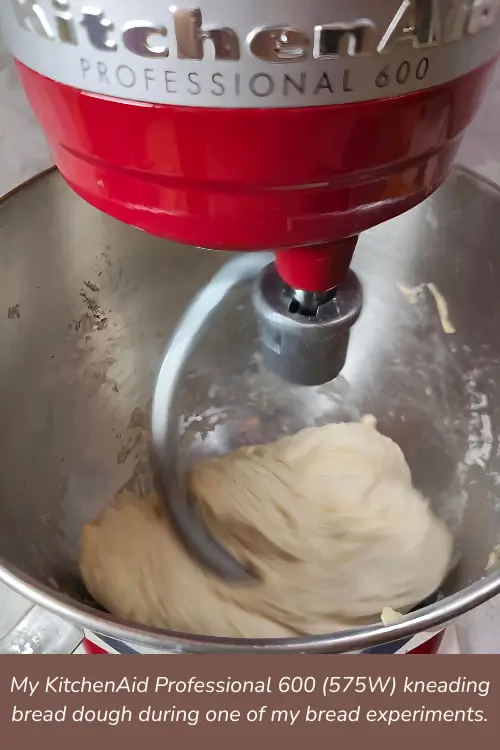
I also draw on my own experience with a KitchenAid 6-quart bowl-lift stand mixer, which has been discontinued, to evaluate the practical demands of kneading bread dough, including handling different dough hydration levels, mixing larger batches, and maintaining consistent kneading performance.
What Is The Best Stand Mixer For Bread Dough
The best stand mixer for bread isn’t necessarily the one with the highest wattage or the biggest bowl.
It’s the one that can consistently handle the types of dough you make, whether that’s sticky sourdough, stiff bagel dough, everyday sandwich bread, or large batches for a home bakery.
The four stand mixers below stand out for excelling in different areas.
Some are designed for wet, artisan doughs, while others are better suited to heavy dough or frequent, high-volume baking.
Understanding those differences will help you choose a mixer that matches how you bake, rather than paying for features you don’t need.
Let’s take a closer look at each mixer and where it performs best.
KitchenAid 7-Quart Bowl-Lift Stand Mixer
Best Overall
The KitchenAid 7-Quart Bowl-Lift Stand Mixer is my top pick for most home bread bakers because it strikes an excellent balance between power, versatility, and capacity.
It kneads bread dough reliably while still serving as a versatile stand mixer for everyday baking.
Although it uses an AC motor, its robust design, all-metal gearing, and generous 7-quart bowl make it well suited to frequent bread baking.
If you’re looking for one stand mixer that performs well across a wide range of recipes, the KitchenAid 7-Quart is difficult to beat.
Quick Specs
| Motor | 500W AC motor |
|---|---|
| Bowl Capacity | 7 qt |
| Mixing Action | Planetary |
| Best For | Most home bread bakers |
| Attachments | KitchenAid attachment hub |
| Warranty | 1-year limited |
Pros & Cons
| Pros | Cons |
|---|---|
| Large 7-quart bowl handles generous batches of bread dough. | Can struggle with very stiff dough at maximum capacity. |
| Familiar planetary mixing action works well for bread and everyday baking. | Motor may warm up during extended kneading sessions. |
| Versatile enough for cakes, cookies, frostings, and more. | Ingredients may occasionally collect at the bottom of the bowl. |
| Compatible with a wide range of KitchenAid attachments. | Costs more than many entry-level stand mixers. |
Best For
- You bake bread regularly but also make cakes, cookies, and other baked goods.
- You want one versatile stand mixer instead of a dedicated bread machine.
- You plan to use KitchenAid attachments such as pasta rollers, meat grinders, or vegetable slicers.
Read the full KitchenAid 7-quart bowl-lift mixer review.
Ankarsrum Assistent
Best for Artisan Bread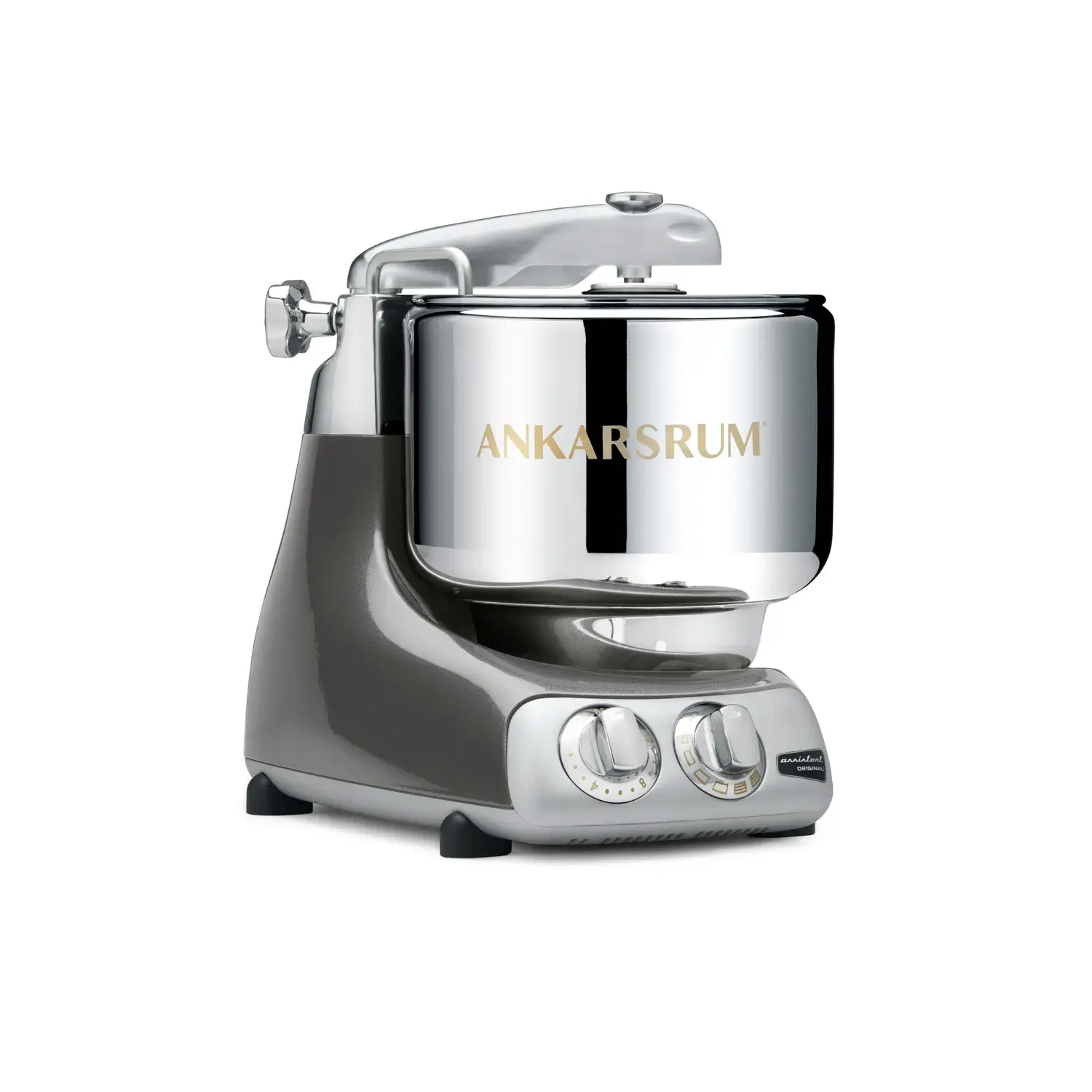
The Ankarsrum Assistent Original is my top recommendation for artisan bread bakers, especially those who regularly make sourdough or other high-hydration doughs.
Its unique roller-and-scraper system gently stretches and folds the dough, like a potter’s hands, helping develop strong gluten without overworking the dough.
While it takes a little time to learn, the Ankarsrum excels at handling wet dough, runs quietly, and is built for frequent bread baking.
If bread is your primary focus and you’re looking for a mixer designed with dough in mind, it’s one of the best investments you can make.
Quick Specs
| Bowl Capacity | 7.4 qt (7 L) |
|---|---|
| Mixing Action | Roller & scraper system |
| Best For | Artisan bread and high-hydration dough |
| Dough Capacity | Up to 11 lb (5 kg) |
| Attachments | Wide range of optional attachments |
| Warranty | 7 years |
Pros & Cons
| Pros | Cons |
|---|---|
| Excellent at developing gluten in high-hydration and artisan dough. | Takes time to learn if you’re used to a planetary mixer. |
| Open bowl design makes it easy to monitor the dough and add ingredients. | Roller and scraper may need occasional adjustment during kneading. |
| Runs quietly, even during extended kneading sessions. | Less convenient for cakes and cookies than a traditional stand mixer. |
| Large dough capacity with a long 7-year warranty. | Premium price compared with most home stand mixers. |
Best For
- You primarily bake artisan breads such as sourdough, ciabatta, and other high-hydration doughs.
- You want a mixer that develops gluten gently without overworking the dough.
- You bake bread frequently and value durability, quiet operation, and a long warranty.
- You’re willing to spend a little time learning a unique mixing system in exchange for exceptional bread-making performance.
Bosch Universal Plus
Best for Large Batches
The Bosch Universal Plus is my top recommendation for bakers who regularly make large batches of bread.
Its unique bottom-drive mixing system and exceptional dough capacity allow it to knead multiple loaves efficiently while placing less strain on the motor than many traditional stand mixers.
Although its appearance and mixing action differ from most stand mixers, the Bosch Universal Plus excels at handling heavy doughs, whole wheat breads, and high-volume baking.
If you frequently bake for a large family, freeze extra loaves, or run through several batches each week, it’s one of the most capable bread mixers you can buy.
Quick Specs
| Motor | 500W motor |
|---|---|
| Bowl Capacity | 6.5 qt |
| Mixing Action | Bottom-drive dough hook |
| Best For | Large batches and heavy bread dough |
| Dough Capacity | Up to 15 lb (6.8 kg) |
| Warranty | 3 years |
Pros & Cons
| Pros | Cons |
|---|---|
| Exceptional dough capacity for multiple loaves and large batches. | Unconventional mixing system takes time to learn. |
| Handles heavy doughs such as whole wheat and bagels with ease. | Plastic housing lacks the premium feel of all-metal mixers. |
| Bottom-drive design kneads dough efficiently with minimal motor strain. | Open center column can make handling very wet dough less convenient. |
| Stable operation, even when mixing large quantities of dough. | Fewer optional accessories than some competing stand mixers. |
Best For
- You regularly bake multiple loaves of bread or prepare large batches of dough.
- You frequently make heavy doughs, such as whole wheat, rye, or bagels.
- You want a mixer designed to handle demanding bread recipes with minimal strain.
- You prioritize dough capacity and kneading performance over premium styling.
Read the full Bosch Universal Plus mixer review.
KitchenAid 8-quart Commercial
Best for Home Bakeries
The KitchenAid 8-Quart Commercial Stand Mixer is my top recommendation for home bakeries and serious bread bakers who need maximum capacity.
Its commercial-grade motor, large stainless steel bowl, and heavy-duty construction are designed to handle frequent mixing and larger batches with confidence.
Although it’s larger and more expensive than the KitchenAid 7-Quart, the extra capacity and robust build make it a worthwhile investment for high-volume baking.
If you regularly bake multiple loaves, sell bread from home, or simply want KitchenAid’s most capable bread mixer, the 8-Quart Commercial is an excellent choice.
Quick Specs
| Motor | 1.3 HP high-efficiency DC motor |
|---|---|
| Bowl Capacity | 8 qt |
| Mixing Action | Planetary |
| Best For | Home bakeries and high-volume bread baking |
| Attachments | Compatible with KitchenAid hub-powered attachments |
| Warranty | 2 years |
Pros & Cons
| Pros | Cons |
|---|---|
| Powerful 1.3 HP DC motor designed for demanding bread dough. | More expensive than most consumer stand mixers. |
| Large 8-quart bowl accommodates high-volume baking. | Large footprint requires ample counter space. |
| Commercial-grade construction built for frequent use. | Heavier to move and store than smaller stand mixers. |
| Compatible with KitchenAid hub-powered attachments. | More mixer than most occasional home bakers need. |
Best For
- You run a home bakery or regularly bake bread to sell.
- You frequently mix large batches or multiple loaves in one session.
- You want KitchenAid’s most powerful and highest-capacity stand mixer.
- You value commercial-grade durability for frequent, long-term use.
What Makes a Good Stand Mixer for Bread?
Before comparing stand mixers, it’s helpful to understand what actually makes one good at kneading bread dough. Four key factors determine whether a mixer can handle heavy dough efficiently without overheating, stalling, or struggling under load.
1. Motor Power
Torque: DC vs AC Motors
DC motors generally deliver stronger low-speed torque and maintain speed more consistently under changing loads.
Well-designed AC motors can also perform exceptionally well, but they often rely more on gearing and transmission design to achieve similar kneading performance.
Stand mixers with DC motors, such as the KitchenAid 8-Quart Commercial, generally perform better with stiff doughs and frequent bread baking because they maintain consistent torque under heavy loads.
Go to this guide to learn more about torque, AC motors, and DC motors
Motor performance depends not only on the motor itself but also on the transmission that transfers power to the dough hook.
Wattage vs. Actual Kneading Power
Wattage tells you how much electricity a mixer uses, not necessarily how well it kneads bread dough
A stand mixer with a well-designed transmission and strong torque will knead bread dough far better than one that boasts a high wattage. The Bosch Universal Plus, for example, features a 500-watt motor but handles massive batches with ease.
My 575-watt KitchenAid 6-quart bowl-lift mixer has no trouble kneading dough for three loaves (3½ cups of flour each at 65% hydration). It’s a good reminder that a mixer’s bread-making ability depends on more than the wattage.
Why Low-Speed Torque Is Vital for Kneading
A steady, controlled force, not speed, is important in kneading dough.
If a mixer can’t maintain high torque at low speed, it will either stall or force you to switch to a higher speed. That can overheat the dough and affect gluten development.
Look for models that can handle tough dough at lower speeds without struggling.
KitchenAid recommends kneading yeast dough on Speed 2 to avoid damaging the mixer.
2. Mixing Mechanisms
Different mixing actions affect how well ingredients are incorporated and how gluten develops.
Planetary Action for General Mixing
This is the classic stand mixer motion, where the beater moves around the bowl while spinning on its axis (like a planet orbiting the sun).
It provides thorough ingredient incorporation and works well for most baking tasks, making it the most versatile mixing system.
Belt-Driven Systems: Gentle Kneading for Artisan Breads
Some stand mixers, such as the Ankarsrum Assistent, use a unique roller-and-scraper system instead of the traditional planetary action. As the bowl rotates, the roller gently stretches and folds the dough against the side of the bowl, while the scraper keeps it moving evenly.
This gentle kneading action is particularly effective for high-hydration doughs like sourdough and ciabatta because it develops gluten without overworking the dough.
3. Actual Capacity
What size stand mixer do you need for making bread? It will depend on the quantity you make.
Choosing the right bowl size isn’t just about how much dough you want to mix; it’s also about how much dough you can mix and how much space the dough needs to develop gluten properly.
Finding the Right Bowl Size for Your Baking Volume
The right bowl size depends on how much bread you typically bake. While larger bowls offer more capacity, they’re only necessary if you regularly mix multiple loaves or large batches of dough.
- 4.5–5 quarts: Best for small batches or occasional baking.
- 6–7 quarts: Ideal for frequent bread bakers making one or two loaves at a time.
- 8+ quarts: Best for large batches, multiple loaves, or home bakeries.
Maximum Dough Capacity vs. Advertised Bowl Size
Manufacturers often list bowl capacity in quarts, but that doesn’t always translate to how much dough it can handle. For example, a 7-quart bowl doesn’t mean you can mix 7 quarts of dough.
Check the maximum flour weight capacity (often listed in pounds).
Some mixers, like the Bosch Universal Plus, can handle up to 15 pounds of dough, whereas others struggle with half that amount, despite having a similar bowl size.
Headroom: Why Dough Needs Space
Dough expands as it kneads, and if a bowl is too full, gluten won’t develop properly.
It’s best to leave at least ⅓ of the bowl empty to allow for proper movement, especially for sticky, high-hydration doughs that climb up the hook.
4. Control and Precision
True Low-Speed Kneading: A Must for Bread
A good bread mixer should maintain a slow, steady kneading speed without stalling or forcing you to increase the speed.
Slow kneading helps with gluten development and prevents the dough from getting too hot.
Variable Speed Controls and Their Impact
Speed settings aren’t just about mixing faster; they give you greater control over different stages of baking. While bread dough benefits most from slow, steady kneading, additional speed settings are useful for other mixing tasks.
- Low speeds: Best for incorporating ingredients and kneading bread dough without overheating it.
- Medium speeds: Suitable for mixing cake batters and cookie dough.
- Higher speeds: Ideal for whipping cream, beating egg whites, and other aerating tasks.
I generally prefer a mixer with at least six speed settings, though some of the best bread mixers (like the Ankarsrum) only have a simple speed dial, and it works just fine.
Best Mixer For Dough: Essential Performance Factors
Dough Handling Capabilities
A good bread mixer should handle the types of dough you make most often without struggling.
High-Hydration Dough
Wet doughs, such as sourdough and ciabatta, require steady gluten development without overheating. Mixers like the Ankarsrum Assistent excel with high-hydration dough thanks to their roller-and-scraper system and open-bowl design.
Stiff Dough
Bagel and pretzel dough place the greatest strain on a mixer. Look for a model with strong low-speed torque, durable gearing, and enough power to knead dense dough without stalling.
Whole Grain Dough
Whole wheat, rye, and other specialty flours produce heavier dough than white bread flour. A mixer with consistent kneading action and generous dough capacity, such as the Bosch Universal Plus, handles these recipes more effectively.
Thermal Management
Bread dough generates heat as it kneads, and excessive heat can affect both the mixer and the dough.
Heat Management
Efficient cooling and low-friction drive systems help reduce heat buildup during long kneading sessions.
Continuous Operation
If you regularly knead dough for 10 minutes or longer, choose a mixer designed for extended operation without frequent cool-down breaks.
Keep in mind that kneading time varies depending on the dough and the mixer. Learn how to tell when your dough is fully developed in my guide on How Long to Knead Bread Dough.
Overload Protection
Many mixers automatically shut off when overloaded to protect the motor. Models with stronger torque are less likely to trigger overload protection when kneading heavy dough.
Build Quality
A well-built mixer is better equipped to withstand years of bread baking.
Metal Gearing
All-metal gears generally provide better durability than plastic gears when mixing heavy bread dough.
Stable Construction
A sturdy mixer stays more stable under load, especially when kneading stiff or high-volume dough.
Practical Considerations
Performance matters most, but everyday usability is also important.
Size and Storage
Choose a mixer that fits both your baking volume and your available counter or storage space.
Noise
Mixers vary in operating noise. If you bake frequently, quieter models may be more pleasant to use.
Ease of Handling
Consider the mixer’s weight, bowl design, and accessibility, particularly if you have limited hand, wrist, or shoulder strength.
Choose the Mixer That Fits the Way You Bake
The best stand mixer for bread dough isn’t the one with the biggest motor or the highest price tag. It’s the one that fits the types of bread you bake, the amount of dough you typically mix, and how often you use it.
If you want one versatile mixer for bread and everyday baking, the KitchenAid 7-Quart Bowl-Lift is my top recommendation.
If artisan bread is your passion, the Ankarsrum Assistent stands out for its gentle dough handling.
For large batches, the Bosch Universal Plus is hard to beat, while the KitchenAid 8-Quart Commercial is the best choice for home bakeries and frequent, high-volume baking.
The right mixer won’t make great bread on its own, but it will make kneading easier, more consistent, and less physically demanding.
Instead of wondering whether your mixer can handle the dough, you’ll be able to focus on what matters most—the satisfaction of shaping, baking, and slicing into a loaf that turns out just the way you want.