
Notice: I receive compensation if you buy something through affiliate links on this post. This does not change the price you would pay. As an Amazon Associate I earn from qualifying purchases.
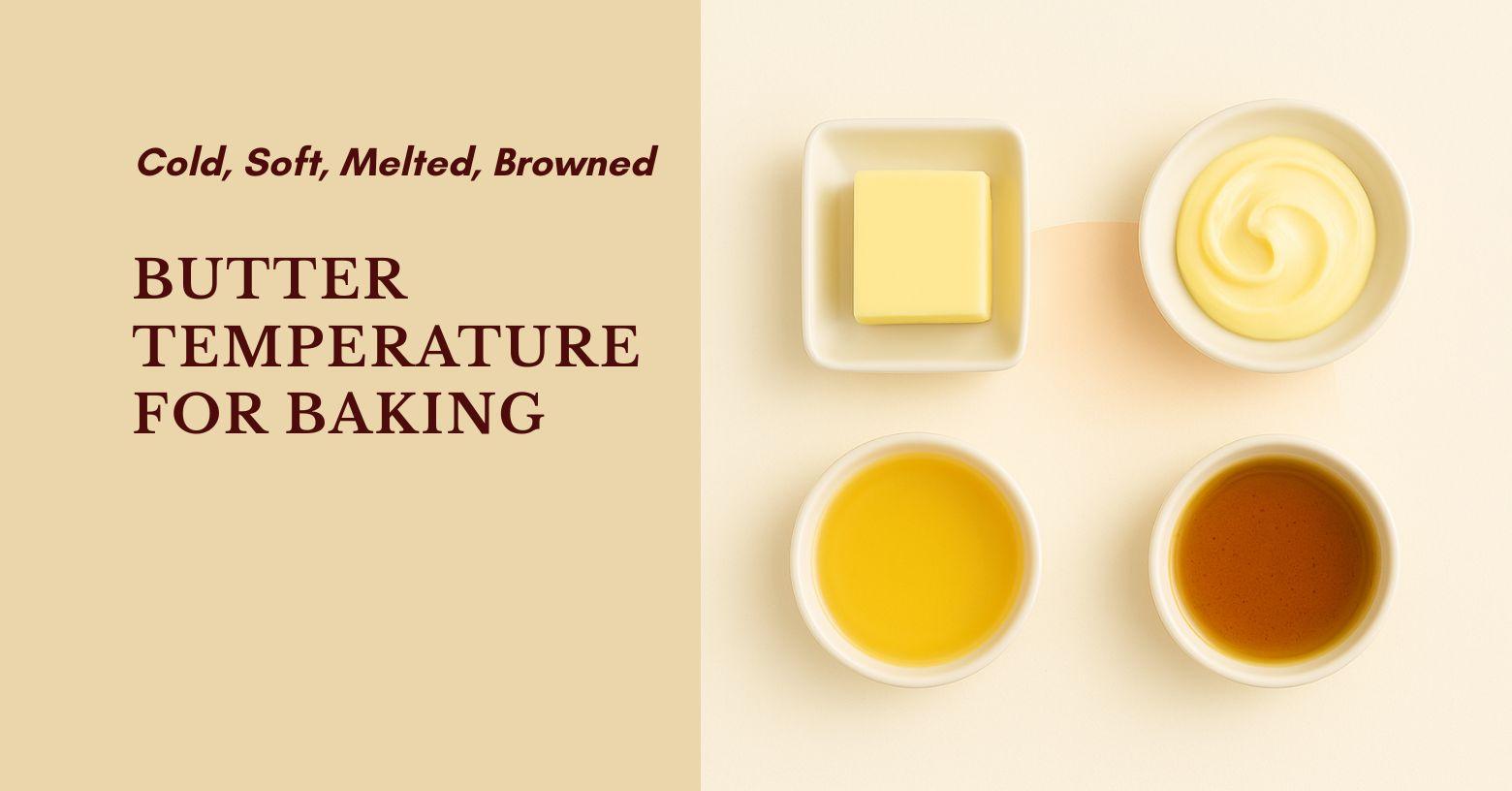
Butter Temperature for Baking
Cold butter → best butter temperature for baking flaky pies, puff pastry, biscuits, scones.
Softened butter → ideal butter state for baking fluffy cakes, cupcakes, and many cookies.
Melted butter → great for chewy cookies, fudgy brownies and blondies.
Browned butter → nutty, toasted flavor with slightly denser or crisper texture.
Match the butter state to the texture you want: flaky, fluffy, chewy, or deeply flavorful.
Have you ever followed a recipe exactly and still ended up with flat cookies or tough pie crust?
A lot of the time, the “mystery problem” is simple: your butter was at the wrong temperature.
Butter isn’t just fat in your recipe.
Its temperature and structure decide how much air gets trapped in your batter, how much your dough lifts or spreads, and whether your crumb is fluffy, chewy, dense, or tough.
When you understand butter states for baking, you can predict your results before you even turn on the oven.
In this guide, we’ll walk through the four main butter states—cold, softened, melted, and browned—what they’re best for, what happens inside the oven, and how to fix common butter mistakes.
By the end of this post, you’ll know exactly which butter state to use, what happens if you get it wrong, and how to rescue things when real life doesn’t match the recipe.
Let’s start with a quick cheat sheet so you can see the whole picture at a glance, then we’ll walk through each butter state, step by step.
Butter State Cheat Sheet for Baking
| Butter State | Approx. Temp / Feel | Best For |
|---|---|---|
| Cold butter | 40–50°F / 4–10°C, very firm | Pie crust, puff pastry, biscuits, scones |
| Softened butter | 60–68°F / 16–20°C, cool but easily dented | Cakes, cupcakes, buttercream, many cookies |
| Melted butter | Fully liquid, cooled to lukewarm | Chewy cookies, brownies, blondies, quick breads |
| Browned butter | Liquid, golden with browned milk solids | Cookies, bars, simple cakes, frostings |
Now that you’ve seen the big picture, let’s move through each butter state one by one, discussing why it matters and what happens inside your baked goods.
Table of Contents
- 1 Cold Butter for Pie Crust: Why This Butter State Makes Flaky Layers
- 2 Softened Butter for Baking: The Key to Fluffy Cakes and Balanced Cookies
- 3 Melted Butter for Chewy Cookies and Fudgy Brownies
- 4 How to Brown Butter for Baking (and When to Use It)
- 5 How to Tell Butter Temperature for Baking Without a Thermometer
- 6 FAQs About Butter Temperature for Baking
- 7 From Butter States to Better Bakes
Cold Butter for Pie Crust: Why This Butter State Makes Flaky Layers
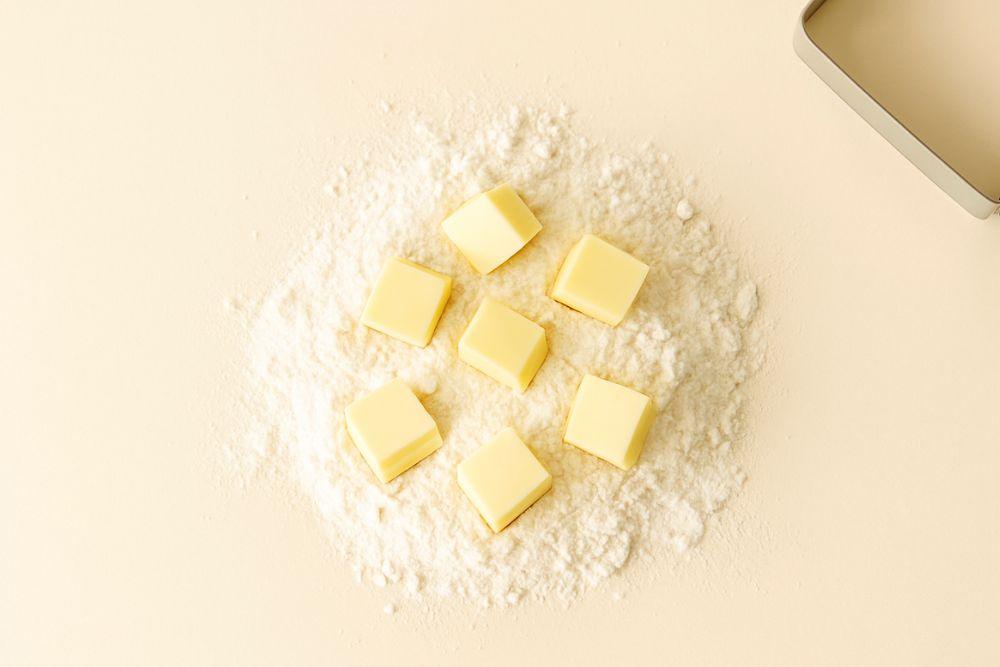
If your goal is flaky, not fluffy, cold butter, it should be.
Cold butter is straight from the fridge, firm under your fingers, and holds its shape when sliced or cubed. When you cut cold butter into flour, you want to see still small, visible pieces, like little pebbles or flat shards, scattered through the dough.
In the oven, those bits of butter melt, and the water in them turns to steam. That steam pushes the dough apart in tiny pockets. That’s where your flaky pastry, layered biscuits, and tall scones come from.
If your pie crust has ever come out flat, greasy, or tough, chances are your butter was too warm. Instead of steaming and lifting, it smeared into the flour and melted too early, leaving you with heavy, oily pastry.
Do these when you’re working with pie crust, puff pastry, rough puff, or biscuit dough:
- Before mixing: cube the butter and chill it again.
- While mixing, stop if the dough starts to feel soft or oily.
- Before baking: chill shaped pies or biscuits so the butter re-firms.
Now that you know what makes for flaky pie crusts, let’s discuss the opposite approach—softened butter for cake.
Softened Butter for Baking: The Key to Fluffy Cakes and Balanced Cookies
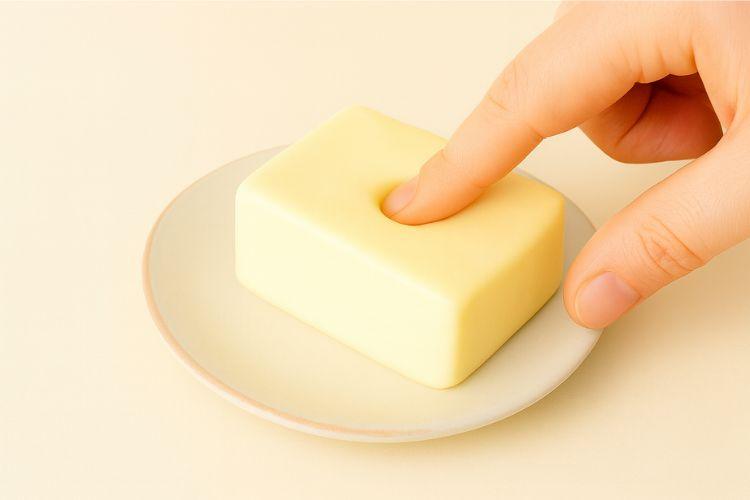
Where cold butter gives you flakiness, softened butter gives you fluff.
Softened butter should feel:
- Cool to the touch
- Easy to press with your thumb, leaving a clean dent
- Matte on the surface, not shiny or oily
That’s what recipes usually mean when they say “room temperature butter.”
For butter temperature for baking, we’re aiming for roughly 60–68°F / 16–20°C, but it’s more important that the butter feels pleasantly soft, not squishy or melty.
Softened butter is crucial for the creaming method, in which you beat butter and sugar together until the mixture turns paler and fluffy.
You’re not just mixing here; you’re trapping air. Sugar crystals cut into the butter; butter stretches around them, forming pockets of air. Those pockets expand in the oven and give you:
- Cakes that rise tall instead of staying dense
- Cupcakes with an even, tender crumb
- Cookies with balanced spread—not domes, not puddles
If you’d like a deeper dive into creaming and other methods, I break them down in Mixing Methods in Baking.
The “Fake Butter” Lesson: When Softened Butter Acts Wrong
I once grabbed a block of butter from a brand I didn’t recognize. I was in a hurry, so I didn’t check the ingredients. I softened it, added sugar, and started creaming, expecting a light, cloud-like result.
Instead, I got something else entirely.
The “butter” turned very soft, shiny, and greasy. It never got light or fluffy. It just smeared around the bowl and clung to the paddle. It felt more like an oily spread than baking butter.
Finally, I flipped the package over and read the label. It wasn’t pure butter. It was butter blended with oil.
Blended “butters” like that:
- Have more liquid fat and fewer solid fat crystals
- Struggle to hold air bubbles during creaming
- Lead to dense, greasy batters even if your technique is good
I ended up using some as a spread on bread and tossing the rest. Lesson learned.
So when recipes call for softened butter for baking, especially when you’re creaming, double-check the label for words like “spread” or “with vegetable oil.” They can be lovely on toast, but they’re not for creaming.
What Happens If Butter Is Too Soft for Baking?
When butter is too soft or starting to melt:
- It turns shiny and greasy before you even begin creaming
- It can’t hold air very well
- Your batter becomes heavy and slightly oily
- Cookies spread too much and bake up thin
- Cakes may rise poorly and end up dense
On the flip side, if your butter is too cold, the sugar can’t be cut in properly, and the mixture stays lumpy. Your cakes can bake up with tunnels or dense patches because the air pockets never formed evenly. Softened butter really is that Goldilocks middle.
How to Soften Butter Quickly (Without Melting It)
A few gentle tricks:
- Cut butter into small cubes and spread them out on a plate.
- Gently press the cubes between sheets of parchment with a rolling pin.
- Use very short microwave bursts on low power, rotating the butter often, and stop while the center still feels slightly cool.
For food safety, don’t leave butter blocks out indefinitely. If you want an overview of safe time-and-temperature rules, the FDA’s guide on storing food safely is a good starting point.
Once you’ve mastered softened butter and the creaming method, you’re ready to explore another butter state: melted butter.
Melted Butter for Chewy Cookies and Fudgy Brownies

If softened butter is about air, melted butter is about chew and fudge.
Melted butter is fully liquid—smooth and fluid—but for baking, it should be cooled to a gentle lukewarm before you add eggs. If it’s hot enough to sting your finger, it’s too hot.
Using melted butter skips the creaming step entirely. There’s no whipping in air. Instead:
- Liquid fat coats the flour quickly.
- Gluten develops differently.
- The result is denser, chewier, and often fudgier.
That’s why you’ll see melted butter used in:
- Chewy chocolate chip cookies
- Fudgy brownies and blondies
- Some quick breads and muffins
If you’ve ever made a brownie that turned out perfectly fudgy instead of cakey, there’s a good chance the recipe called for melted butter (or oil).
Can I Use Melted Butter Instead of Softened Butter?
You can, but expect different results:
- Cookies designed for softened butter and creaming will usually spread more and become chewier and thinner with melted butter.
- Cakes that rely on creamed butter and sugar will often bake shorter and denser if you swap in melted butter, because you’ve removed the step that builds structure.
Melted butter is fantastic when the recipe is written for it. When you want lift and fluff, stick with softened butter instead.
Let’s move on to the butter state that gives it a glorious flavor and aroma: browned butter.
How to Brown Butter for Baking (and When to Use It)

Browned butter results when you go past “melted” and let the milk solids toast. The French call it beurre noisette, and it smells like toasted hazelnuts and caramel.
To make browned butter, melt it in a saucepan and let it simmer gently. The water boils off. The milk solids sink to the bottom and turn golden brown. As they toast, the kitchen fills with that deep, nutty aroma that makes you want to dip a spoon in and taste.
Browned butter is still liquid, but it has:
- Less water (some evaporates)
- Toasted milk solids that pack extra flavor
That little loss of water means baked goods made with browned butter can be slightly denser or crisper, but the flavor is heavenly.
Browned butter is great for::
- Chocolate chip cookies, sugar cookies, shortbread
- Brownies, blondies, and bar cookies
- Banana bread, pumpkin bread, and simple snack cakes
- Glazes and buttercreams where you really taste the fat
If you want a step-by-step photo tutorial, King Arthur Baking has a useful guide on making brown butter.
One thing to note: browned butter goes from pale yellow to golden to dark brown in what feels like seconds. Watch it closely, swirl or stir, and pull it off the heat when the flecks at the bottom are a warm toasty brown, not black.
Once you understand all four butter states—cold, softened, melted, and browned—the natural next question is: can you swap them?
Can You Swap Butter States in Recipes? What Really Happens
This is where real life meets recipe instructions. You can experiment with swapping, but you should know what will change.
Expect these results:
- Melted instead of softened in cookies: more spread, more chew, thinner cookies.
- Softened instead of cold in pie crust or scones: fewer visible butter pieces, less steam, flatter and tougher pastry.
- Cold instead of softened in creamed cakes: sugar can’t cut in properly, the batter doesn’t get fluffy, cakes bake up dense and uneven.
- Browned instead of regular butter: richer, nutty flavor with slightly less moisture and a touch more crispness, especially in cookies and bars.
As you bake more, you’ll start seeing butter states not as rigid rules but as levers. You’ll think, “If I want this chewier, I’ll use melted butter. If I want more lift, I’ll use softened butter and cream it properly.”
If you love tinkering with texture, my 15 Baking Hacks post has more little tweaks like that.
How to Tell Butter Temperature for Baking Without a Thermometer
You don’t need to hover over every stick of butter with an instant-read thermometer. Your senses are plenty.
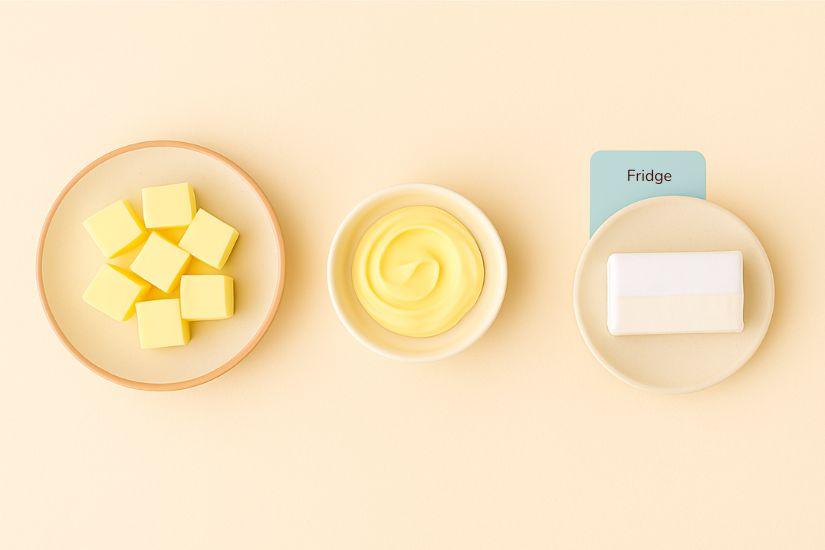
- Cold butter feels like a chilled stick of clay. Your knife resists as it cuts, and a quick press of the finger barely leaves a mark.
- Softened butter feels like cool modeling clay. Your thumb sinks in easily, but the stick still holds its shape and edges.
- Melted butter glides around the bowl like warm golden silk.
- Browned butter is melted butter’s deeper, toastier cousin. It’s amber-colored with little brown specks at the bottom, and it smells like you want to inhale the steam rising off the pan.
Try these if you’d rather go by feel than by numbers:
- For softened butter, press gently with your fingertip. It should give way but still feel cool—like touching the side of a mug that once held warm tea.
- For melted butter, drip a little on the inside of your wrist. It should feel slightly warm, but not hot, before you mix in eggs.
With a little practice, you’ll start to recognize each butter state almost automatically, just like you learn to tell when a dough is kneaded enough.
If you struggle with dough texture, especially for bread, my guide to the Best Stand Mixer for Bread Dough can help you match the right mixer to the job.
Quick Butter Emergencies (Because Real Life Happens)
Even with the best intentions, we all forget to take butter out of the fridge or accidentally zap it for too long in the microwave. This is where a few quick “emergency” fixes can save a bake day.
- Butter is rock-hard and you need softened butter now:
Cut it into small cubes and spread them out on a plate, or gently press the cubes with a rolling pin between parchment until they soften. - Butter is too soft and greasy:
Slide it into the fridge for a few minutes. You’re aiming to bring it back to that cool, dentable stage, not all the way to solid. - You meant to soften butter and fully melted it instead:
Chill it while stirring occasionally until it thickens and turns spreadable, then use it like softened butter, or pivot to a recipe that loves melted butter (chewy cookies, brownies, blondies) and let that “mistake” work for you.
And if your butter mishap goes hand in hand with stand mixer drama, my KitchenAid Mixer Troubleshooting guide can help on the mixer side, too.
Butter gives you plenty of opportunities to improvise; you just need to know what each state does in the oven.
FAQs About Butter Temperature for Baking
What happens if butter is too soft for baking?
When butter is too soft or starting to melt, it can’t hold air well during creaming. Batters made with overly soft butter often turn greasy and heavy. Cookies spread too much and bake up thin, and cakes can come out dense with poor rise.
Can I use melted butter instead of softened butter?
You can, but expect a different outcome. Melted butter usually makes cookies chewier and flatter and can make cakes denser. If a recipe is built around creaming softened butter and sugar, swapping in melted butter changes the structure.
What is room temperature butter for baking?
For baking, “room temperature butter” means softened butter that is cool but dentable, not squishy or shiny. Think 60–68°F / 16–20°C and a texture that yields to your thumb while still feeling slightly cool.
How do I soften butter quickly without melting it?
Cut it into small cubes, spread them out, and let time and air do some work. If you’re in a rush, use very short microwave bursts on low power and stop as soon as it’s dentable but still cool to the touch.
From Butter States to Better Bakes
So, here you are now: you know which butter state to use and why.
Remember that every time you bake, you’re making tiny texture decisions with your butter.
Use cold butter for a pie crust that shatters into flaky layers, softened butter for cakes that rise tall and tender, melted butter when you’re craving chewy cookies or fudgy brownies, and browned butter when you want that deep, nutty aroma that fills your kitchen with a to-die-for aroma.
You don’t need a thermometer in one hand and a pastry diploma in the other. You just need to look at your recipe, decide what texture you want, and choose the butter state that matches. That’s it.
So the next time you press your thumb into a stick of butter or watch it pool golden in a pan, you’ll know you’re not guessing anymore—you’re shaping the final bite purposely.