
Notice: I receive compensation if you buy something through affiliate links on this post. This does not change the price you would pay. As an Amazon Associate I earn from qualifying purchases.
Why Pasta Sticks (and What to Do)
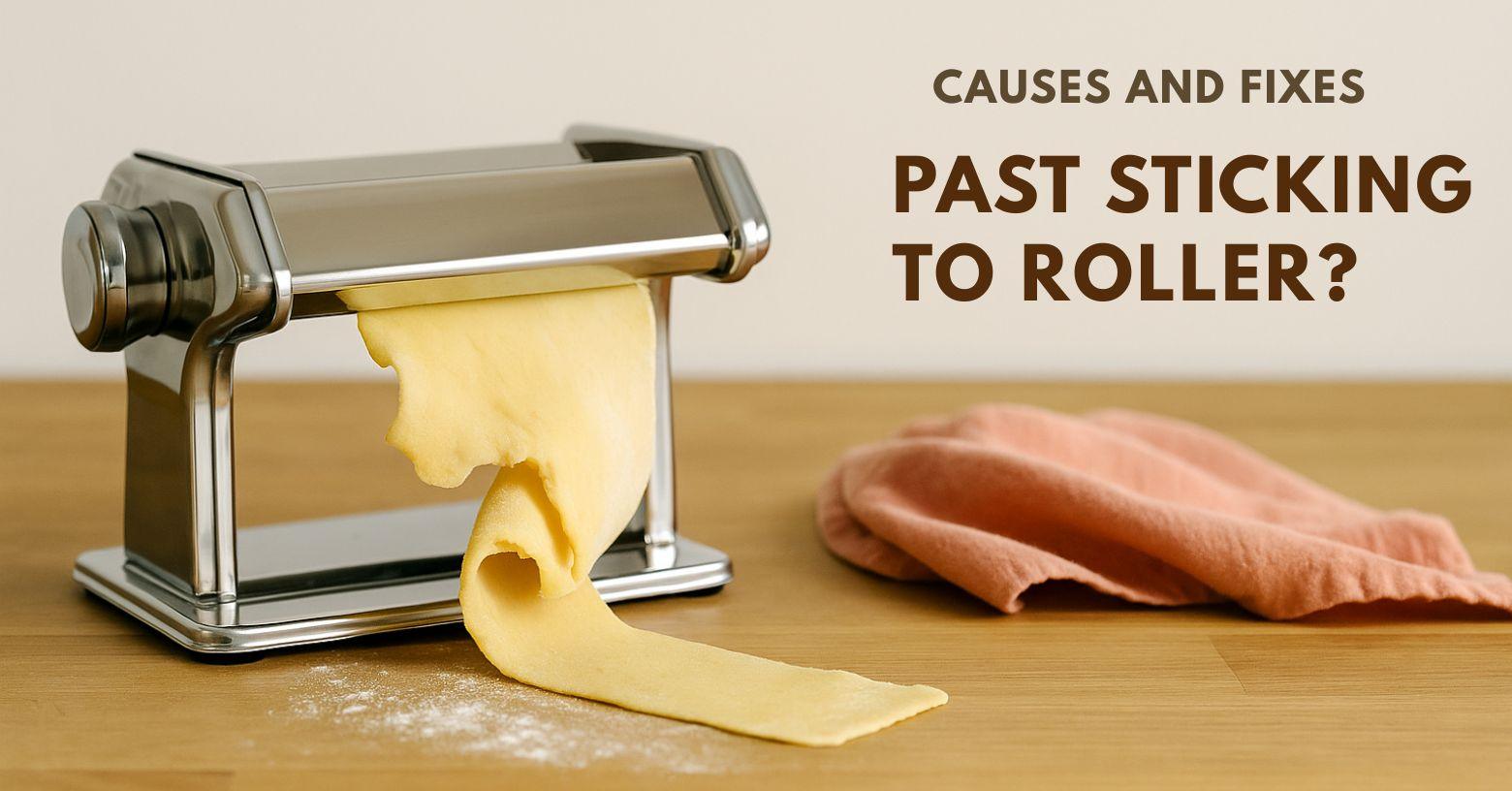
If pasta dough sticking to roller keeps ruining your pasta, it’s almost always one of three things:
Dough too wet or weak: It should feel smooth, elastic, and tacky, not sticky. Knead 8–10 minutes, rest 20–30 minutes, and add flour a little at a time if it clings to your fingers.
Wrong timing at the machine: Start on the widest setting, dust lightly with flour, and feed the dough in one smooth pass. Let sheets dry 1–2 minutes before cutting so they’re not shiny-wet.
No dusting or dirty cutters: Toss fresh strands in a little semolina/rice/corn flour so they don’t clump, and let any stuck dough on rollers/cutters dry, then brush it off—no soaking in water.
Get those three pieces right, and your pasta will start coming out in smooth sheets and clean, separate strands.
You set up for homemade pasta—eggs cracked, flour on the counter, machine clamped tight, and then it happens: pasta dough sticking to roller, smearing, tearing, or wrapping itself around the drum. Or it sneaks through the roller just fine, only to weld itself to the cutters, so you get clumpy, glued-together noodles instead of soft, silky strands.
Your hands are sticky, the machine sounds angry, and that dreamy “fresh pasta at home” moment feels… not so dreamy.
Most of the time, this isn’t a total fail—it’s usually dough that’s a bit too wet, not quite kneaded or rested enough, or a machine that needs a quick clean and better dusting of flour, not another desperate pass of dough.
In this post, we’ll walk through how to read your dough by feel, keep it moving smoothly through the rollers and cutters, and stop fresh strands from fusing into a floury clump.
First, let’s do a quick check and figure out where the real problem is hiding: in the dough, the machine, or the strands after they’re cut.
Table of Contents
- 1 Quick Check: Is It the Dough, the Machine, or the Strands?
- 2 Why Your Pasta Dough Sticks to the Roller
- 3 Easy Fixes When Pasta Sticks on the Roller
- 4 When Pasta Sticks to the Cutters Instead of Falling in Strands
- 5 How Sticky Should Pasta Dough Be Before Rolling?
- 6 How to Keep Fresh Pasta Strands From Sticking Together
- 7 Cleaning Rollers and Cutters So Dough Won’t Stick Next Time
- 8 Final Tips: When to Fix, When to Start a New Batch
- 9 Pasta Dough Sticking to Roller – Quick FAQ’s
Quick Check: Is It the Dough, the Machine, or the Strands?
Before you change everything at once, let’s do a quick triage.
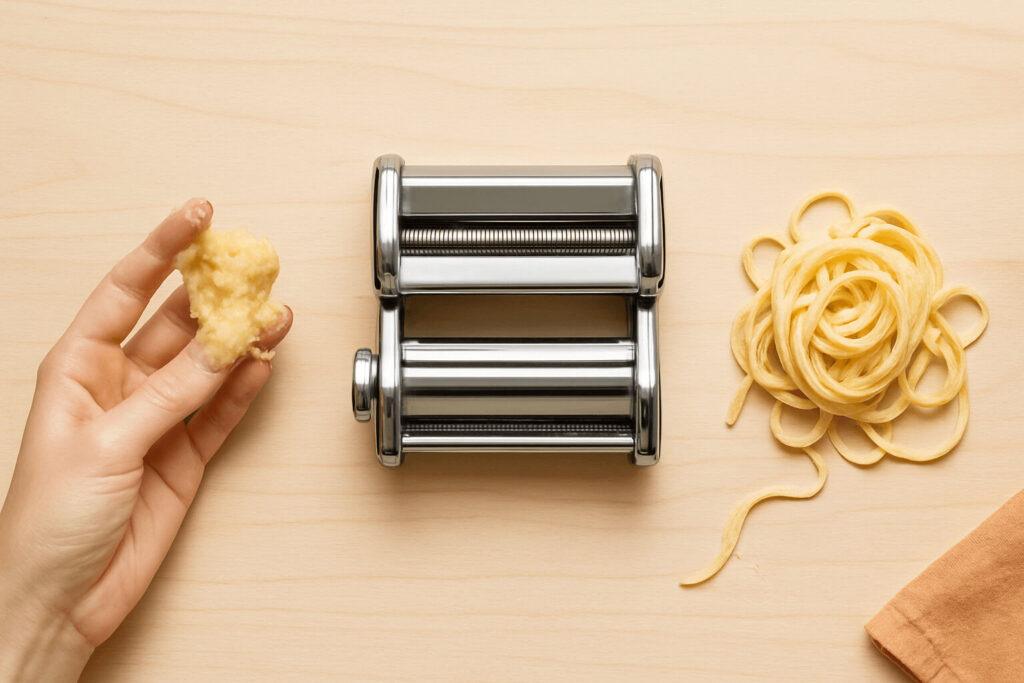
Most pasta problems fall into three buckets:
- The dough is too sticky or under-kneaded.
- The machine (rollers/cutters) has dough buildup or a bit of oil + flour gunk.
- The strands are clumping after they’re cut.
A good rule of thumb:
- If the dough is sticking to your hands, board, and roller? The dough is the problem.
- If the dough looks OK but the machine feels grabby, squeaks, or jams? It’s a machine + cleaning issue.
- If the dough rolls and cuts nicely, but you end up with a heap of fused noodles on the tray? That’s a handling/dusting problem.
We’ll walk through each one so you can fix the real culprit without tossing the whole batch.
Why Your Pasta Dough Sticks to the Roller
Sometimes the pasta machine is innocent. It’s just telling you, “Hey, this dough isn’t ready yet.”
Dough That’s Too Wet (The #1 Reason for Sticking)
Sticky dough almost always means too much moisture somewhere.
The eggs may have been larger than the recipe assumed. Maybe you added “just a splash” of water or oil to bring it together. Or perhaps it’s a humid day, and your flour simply can’t soak up as much liquid.
If your dough:
- Glues itself to your fingers
- Smears onto the roller instead of gliding through
- Needs a bench scraper to pry off the counter
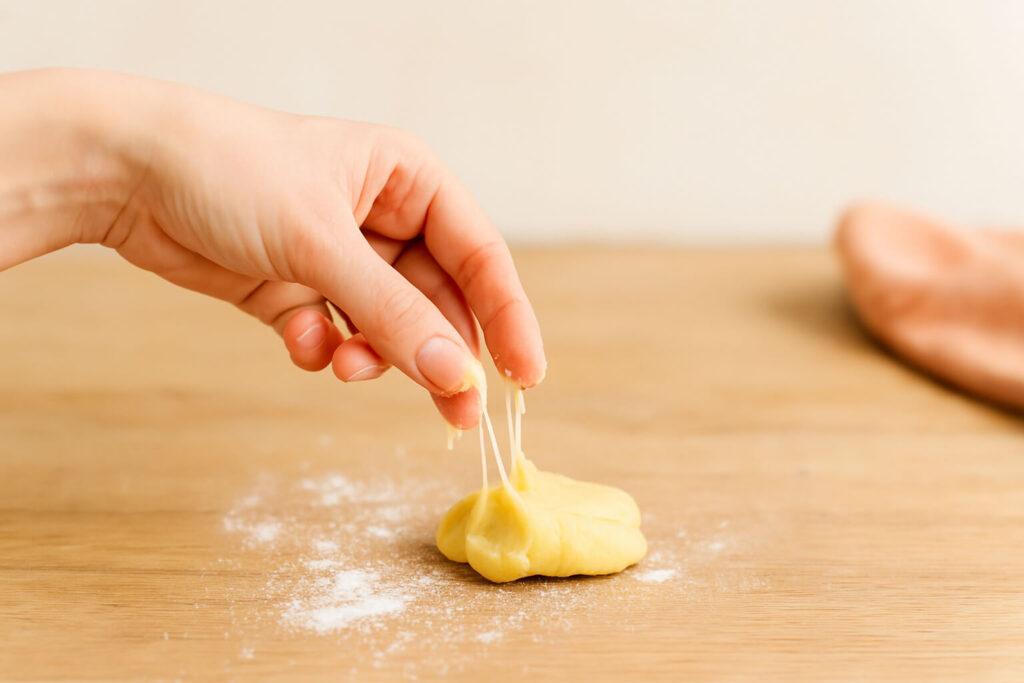
…it’s too wet. The goal is dough that feels smooth and just slightly tacky, but doesn’t leave a sticky trail on anything it touches.
Not Enough Kneading or Resting Time
Even if the ingredients are right, under-kneaded dough can still grab onto the rollers.
When the gluten hasn’t developed, the dough is weak and uneven. Parts might be wetter than others, so sticky patches catch on the rollers and tear.
A good knead by hand takes around 8–10 minutes. The dough should go from shaggy and rough to smooth and elastic.
Then, let it rest. Even 20–30 minutes at room temperature helps the gluten relax and the moisture even out. Rested dough feeds through the machine nicely.
Humidity, Egg Size, and Flour Type
The dough recipe you’re using is a starting point, not a law.
- Humidity: On a hot, humid day, flour absorbs less liquid.
- Egg size: “Large” eggs can vary widely across brands.
- Flour type: 00 flour and all-purpose flour behave differently from semolina or bread flour.
Instead of chasing exact grams, watch the dough. Add flour a tablespoon at a time until it feels right. Think “play-dough with a little bounce” rather than “cookie dough that won’t let go.”
If you’re not sure your mixer can handle stiffer pasta doughs, my Best Stand Mixer for Bread Dough guide walks through stronger motors and dough-handling power.
Link that phrase to your bread-mixer post.
Easy Fixes When Pasta Sticks on the Roller
Once you’ve identified that the dough is the issue, here’s how to fix it.
How to Fix Pasta Dough Sticking to the Roller
- Stop and Remove the Dough
Turn the handle backward slightly and gently peel or cut all stuck dough off the rollers. - Let the Machine Dry and Brush It Clean
Let any residue dry, then brush it off the rollers with a dry pastry brush or wooden skewer. - Check the Dough Texture by Hand
Press your palm into the dough; if it sticks or looks shiny, it’s too wet and needs more flour. - Knead In a Little More Flour
Sprinkle about 1 tablespoon of flour and knead it in, repeating until the dough no longer sticks to your hands. - Rest the Dough Briefly
Cover the dough and let it rest for 15–20 minutes at room temperature. - Roll Again From the Widest Setting
Divide the dough, dust each piece lightly with flour, and roll it through the machine on the widest setting in one smooth pass. - Adjust Flour as You Go
After each pass, add a light dusting of flour if the dough feels tacky, and only move to thinner settings once the surface feels dry and smooth.
Adjust the Dough – “Tacky, Not Sticky”
Start by kneading in a little extra flour.
Flatten the dough ball, sprinkle on 1 tablespoon of flour, and knead it through. Repeat until the dough:
- Feels smooth and springy
- Still feels alive and flexible
- No longer clings to your hands or the board
You’re aiming for tacky (it lightly grips your skin) but not sticky (it leaves residue behind). If you overshoot and it gets too dry or cracks, sprinkle on a few drops of water and knead again.
Flour Smarter While You Roll
How you handle the dough at the rollers matters just as much as the recipe.
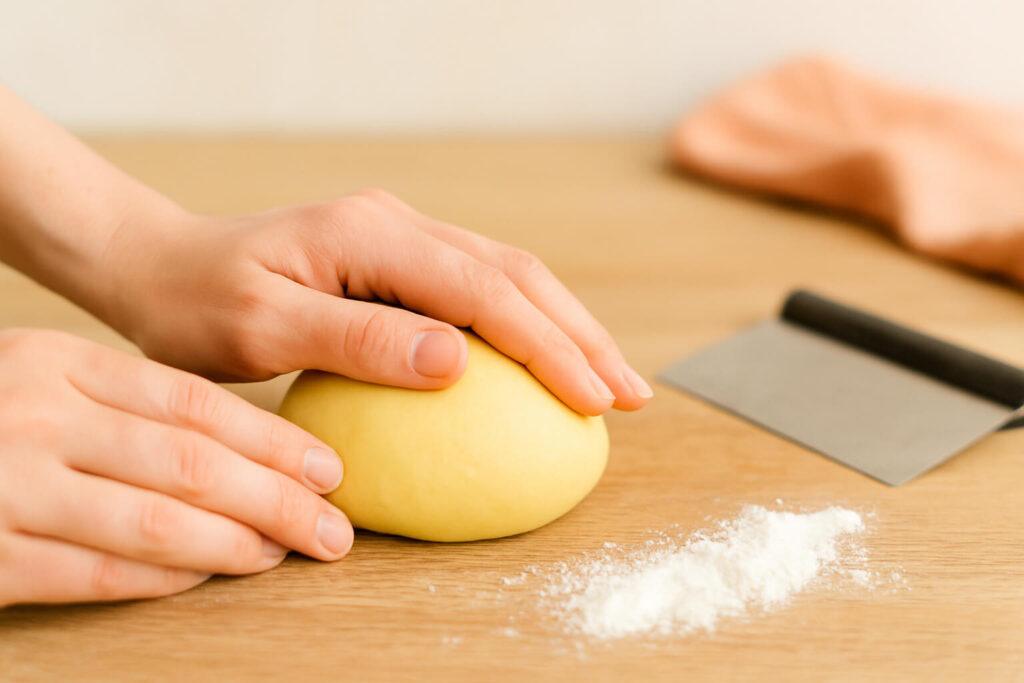
- Divide the dough into small pieces (quarters or sixths).
- Flatten each piece into a thick rectangle with your hands or a rolling pin.
- Lightly dust both sides with flour just before rolling.
Start on the widest setting and run the dough through. If it feels tacky, dust lightly again. If it feels dry and smooth, you can skip extra flour on the next pass.
This is a dance: adjust the flour as you go, rather than dumping a mountain on all at once.
Use the Right Technique on the Roller
Stopping halfway through a roll can cause big sticking problems.
- Feed the dough steadily and smoothly.
- Don’t stop halfway and leave half the sheet hanging in the rollers.
- Support the sheet as it comes out so it doesn’t fold back on itself.
Once the sheet is smooth and no longer sticky on the widest setting, start working down to thinner settings, one step at a time.
If the rollers suddenly start grabbing, back up a step: dust lightly, rest the sheet for a minute, and try again.
If you’re rolling pasta with a stand mixer, my Ultimate Guide to Stand Mixers explains how tilt-head vs. bowl-lift mixers behave with dough.
When Pasta Sticks to the Cutters Instead of Falling in Strands
Different problem, different fix. Here, the dough often looks fine at the roller but misbehaves at the cutter.
Here are the causes and how to fix them…
Dough Too Soft or Damp When You Cut
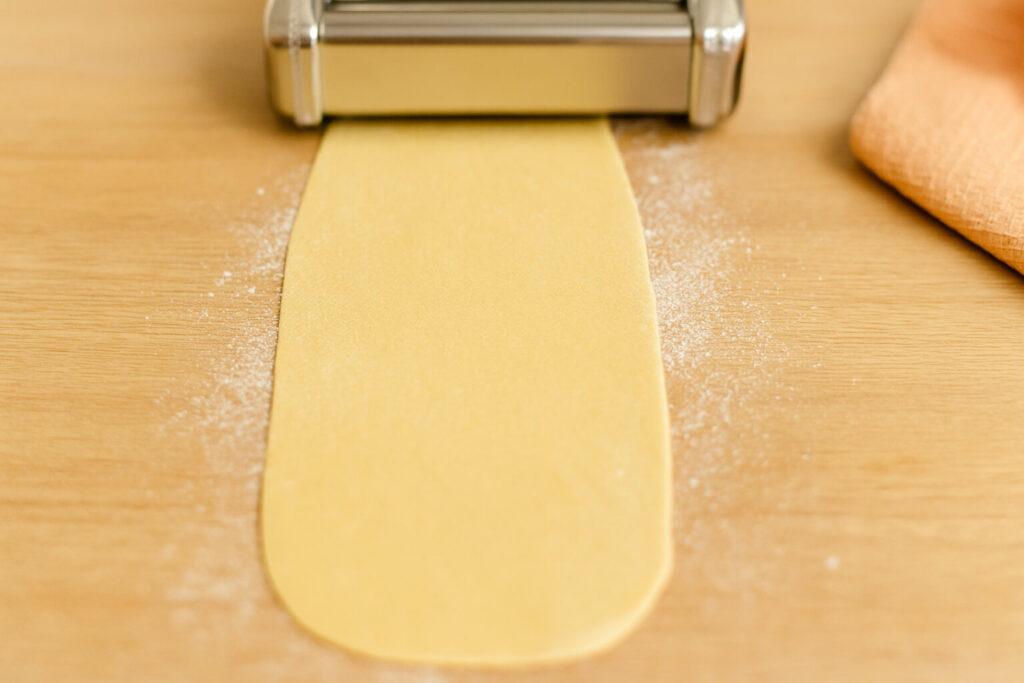
If the sheet is very soft and just a little sticky, the cutter can grab it and smear everything together.
Try this:
- After the last pass through the roller, lay the sheet on a floured surface.
- Let it sit for 1–2 minutes.
- It should lose that shiny, wet look and feel a bit drier on the surface.
You’re not drying it into crackers, just giving the surface a moment to firm up so the cutter can slice cleanly.
Not Enough Dusting Flour at the Cutters
Even a perfect sheet can stick if it goes into the cutter bare.
Before cutting:
- Dust the sheet lightly with semolina, rice flour, or corn flour.
- Set a lightly floured bowl or tray under the cutter.
- As the strands fall, toss them gently in the flour so they separate.
Think of that dusting flour as tiny ball bearings that keep everything sliding instead of clumping.
Oil + Flour Build-Up on Cutters
If you’ve ever oiled the rollers or cutters and then rolled floury dough through them, you might have a sticky paste hiding in there.
That paste loves to:
- Grab fresh dough
- Smear it into the blades
- Turn clean cuts into mashed clumps
The fix is simple but a bit boring: clean the cutters (we’ll talk about how in a minute) and keep oil away from the cutting surfaces. If the manual mentions oil, it’s usually for internal gears, not the rollers themselves.
If you’re using the KitchenAid spaghetti or fettuccine cutters, I go into more detail in my KitchenAid pasta attachments review.
How Sticky Should Pasta Dough Be Before Rolling?
Let’s put a clear picture in your head so you know when to stop tweaking.
Good pasta dough should feel:
- Smooth and elastic
- Soft but not floppy
- Slightly tacky when you press a finger in, but your finger comes back clean
If you pull a piece off and it stretches a little before it breaks, you’re in the right zone. If it tears immediately in jagged chunks, it’s under-kneaded or dry. If it glues itself to you, it’s too wet.
Once the dough feels right:
- Wrap it or cover it so it doesn’t dry out.
- Let it rest 20–30 minutes at room temperature.
That rest makes the dough much easier to roll thinly without the machine fighting back.
New to pasta dough? My Mixing Methods in Baking Guide explains how different mixing styles affect gluten, texture, and structure.”
How to Keep Fresh Pasta Strands From Sticking Together
You’ve finally got beautiful strands, only for them to fuse into one big lump. Let’s stop that from happening.
Dust With Semolina, Rice, or Corn Flour (Not More 00/AP)
The flour you use for dusting matters.
Soft flours like 00 or all-purpose tend to reabsorb into the dough. Coarser flours, such as semolina, rice flour, or fine corn flour, stay separate and act like tiny spacers between strands.
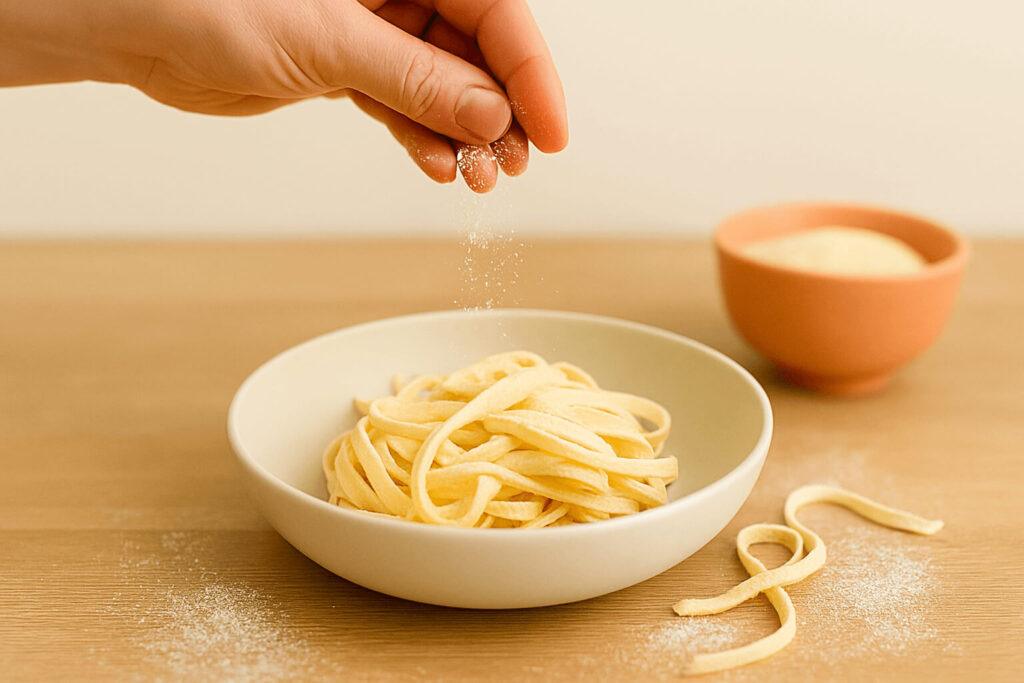
As the pasta comes out of the cutter:
- Sprinkle a little semolina, rice, or corn flour onto a tray or into a bowl.
- Let the strands fall into it.
- Toss them gently with your fingers so they’re lightly coated.
You don’t want a snowstorm, just enough to keep everything from fusing.
Catch and Toss Strands as They Come Out
The “pile and walk away” method is the fastest way to end up with clumps.
Try this rhythm instead:
- Cut a short section of dough.
- Catch the strands in a floured bowl or on a tray.
- Loosely toss and separate them with your fingers.
- Arrange them into small nests or lay them out in loose bundles.
Small nests are easier to keep floured and separated than one giant mound of pasta.
Short Rest, Then Cook or Dry Properly
Fresh pasta doesn’t like long, damp naps.
- If you’re cooking soon, keep the strands floured and spread out or nested loosely, and cook within 30–60 minutes.
- If you want to dry them, hang them or lay them in single layers on floured trays so air can circulate.
The longer you leave fresh pasta sitting in a tight, damp pile, the more chance it’ll glue together.
Cleaning Rollers and Cutters So Dough Won’t Stick Next Time
Clean equipment makes everything easier next time you roll.
Most manual pasta machines and mixer attachments don’t like water. Instead:
- Let any stuck bits of dough dry completely.
- Use a dry brush, wooden skewer, or toothpick to flick the dried pieces out of the rollers and cutters.
- Turn the handle as you go so you can reach everything.
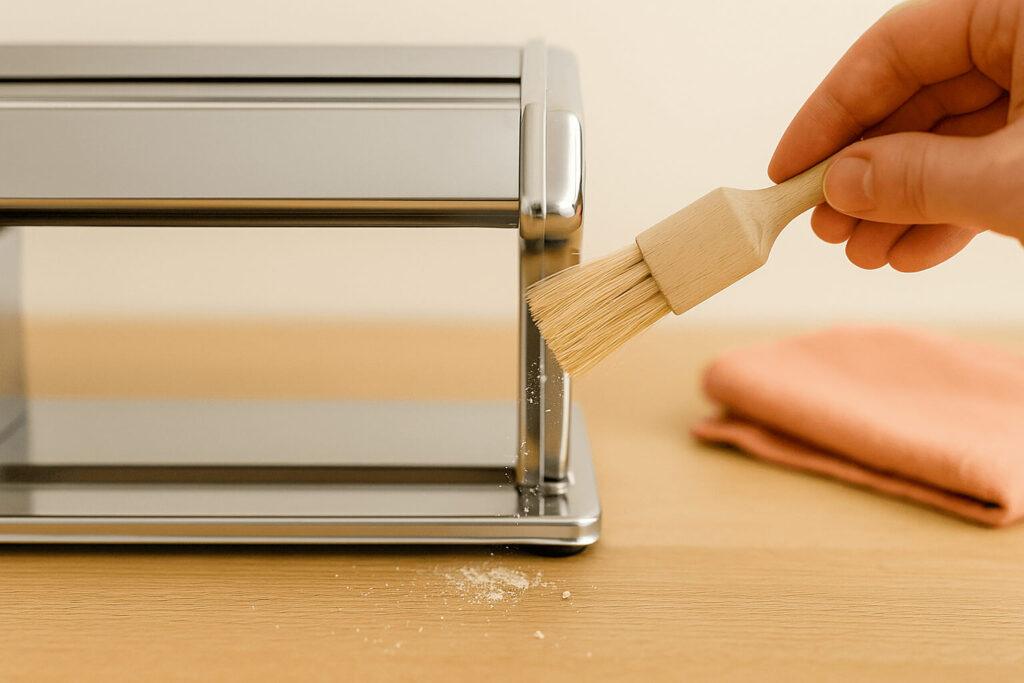
If the manufacturer allows it, you can wipe the outside with a barely damp cloth, but never soak the machine or run it under the tap. Water can cause rust and create new sticking issues.
If your manual mentions oil, it’s usually for internal gears, not for the roller surface. Oil on the rollers plus flour equals paste, and paste grabs dough.
For more on caring for your stand mixer and attachments, I’ve got a full KitchenAid mixer troubleshooting guide that covers common issues.”
Link to your KitchenAid troubleshooting pillar.
Final Tips: When to Fix, When to Start a New Batch
Every pasta cook has had a “this dough is fighting me” day.
If your dough is only a little too sticky, you can almost always fix it with:
- A bit more flour
- Extra kneading
- A short rest
- Smarter dusting and handling at the rollers and cutters
But if you’ve drowned the dough in liquid, or the machine is so gummed up that nothing will pass through, it’s okay to call it. Clean the machine well, note what went wrong, and mix a small new batch with those lessons in mind.
It’s not all lost. That first batch still taught your hands what the dough feels like at different stages, and your next round will be smoother and less stressful.
The Next Time You Bring Out the Pasta Machine
Remember that first scene: pasta dough sticking to the roller, smearing, tearing, and clumping in the cutters? Now you know it wasn’t you “failing at pasta.” It was dough that needed a tweak, a sheet that needed a minute to dry, or rollers and cutters that needed a quick brush and a bit of semolina.
Picture this instead: you clamp the machine down, press your palm into the dough, and it feels smooth, springy, and just tacky enough. The sheet glides through the rollers, the cutters slice cleanly, and noodles fall into soft, floured nests instead of a sticky knot. Still imperfect, still homemade, but not chaotic.
If today’s batch went sideways, don’t let that be the end of it. Pick one or two fixes from this guide—adjust the dough, change how you dust, or clean your rollers properly—and try again.
Clamp the machine back on the counter, crack a couple of eggs, and roll a new sheet. You’ve already done the hard part; now you get to put this knowledge to work.
Pasta Dough Sticking to Roller – Quick FAQ’s
Why is my pasta dough sticking to the roller?
It’s usually too wet or under-kneaded. Add a little flour and knead until the dough feels smooth, elastic, and only slightly tacky.
How do I stop pasta dough sticking to the pasta maker?
Work with small pieces, dust them lightly with flour, start on the widest setting, and feed the sheet through in one steady pass. Clean off any stuck dough before trying again.
How sticky should pasta dough be before rolling?
It should feel smooth and elastic, slightly tacky, but not leave any sticky residue on your fingers.
How do I keep fresh pasta from sticking together after cutting?
Toss the strands right away in a light coating of semolina, rice flour, or corn flour and arrange them in loose nests or single layers.
What is the best flour to keep fresh pasta from sticking?
Semolina, rice flour, or fine corn flour works best because they stay separate from the dough and act like tiny spacers.
How do I clean pasta rollers and cutters when dough sticks?
Let the dough dry completely, then brush or pick it off with a dry brush, skewer, or toothpick—never soak the machine in water.