
Notice: I receive compensation if you buy something through affiliate links on this post. This does not change the price you would pay. As an Amazon Associate I earn from qualifying purchases.
KitchenAid Stand Mixer Comparison – Quick Snapshot
Artisan Mini – 3.5 qt, ~250W DC
Best for light baking in small kitchens (1–3 people): cookies, cakes, frostings, and occasional single-loaf bread.
Classic – 4.5 qt, ~275W AC
Budget-friendly KitchenAid for beginners and occasional bakers doing standard cakes, cookies, and lighter doughs.
De Luxe – 4.5 qt, ~300W AC
Same size as Classic but with more power and a handled bowl; good for those who bake a bit more often.
Artisan – 5 qt, ~325W AC
KitchenAid’s sweet spot: great for most home bakers, larger cookie batches, regular bread, and holiday baking.
5.5 Qt Bowl-Lift – 5.5 qt, higher-torque
Step up power and stability for frequent baking, larger family batches, and regular bread-making.
7 Qt Bowl-Lift – 7 qt, high-torque DC
Built for avid home bakers and side hustlers, mixing heavy doughs and large batches several times a week.
8 Qt Commercial – 8 qt, commercial DC (NSF)
A small “pro” machine for tiny bakeries and cottage food businesses; usually overkill for casual home use.
You sit down to do a quick KitchenAid mixer comparison, and five minutes later, you’re staring at a wall of names and numbers: Classic, De Luxe, Artisan, 5.5, 7, 8 qt… each “powerful”, each “durable”, all starting to look the same.
You want a mixer that fits your kitchen and the way you bake, but every spec sheet, star rating, and opinionated review is pulling you in a different direction.
Maybe you’re torn between a smaller mixer that won’t hog your counter and a bigger one that can handle bread dough without struggling.
Underneath the noise, the questions are simple: how much power do you really need, what bowl size makes sense, and which KitchenAid mixer feels “just right” instead of like an expensive mistake.
In this comparison guide, the focus is on making those choices clear.
You’ll see how the main KitchenAid stand mixer models compare side by side, what power, motor type, bowl capacity, speed settings, accessories, and size mean in real-world baking, and which mixers make sense for small kitchens, beginners, avid bread bakers, and even tiny baking businesses.
First, have a look at the quick decision guide chart.
Table of Contents
- 1 Quick Decision Guide: Which KitchenAid Stand Mixer Fits You Best?
- 2 KitchenAid Stand Mixer Models at a Glance
- 3 Key Features of KitchenAid Stand Mixers
- 4 Model-by-Model Breakdown
- 5 Longevity and Value: Are KitchenAid Stand Mixers Worth It?
- 6 Where Are KitchenAid Mixers Made & Who Makes Them?
- 7 How to Choose: Which KitchenAid Stand Mixer Is Best for Me?
- 8 Stop Scrolling. Start Baking.
- 9 KitchenAid Mixer Comparison FAQs
Quick Decision Guide: Which KitchenAid Stand Mixer Fits You Best?
If you’re stuck between a few KitchenAid options, this quick decision guide is your shortcut.
Start with the row that matches your biggest “real life” factor: how often you bake, what batch sizes you make, your kitchen space, whether you make bread, or your budget. Then go through KitchenAid models that seem to fit your situation, and note what to watch for. You should have a shortlist of 1–2 mixers that make sense for you.
| Decision factor | If this sounds like you… | Recommended KitchenAid classes | Notes |
|---|---|---|---|
| How often you bake | You bake a few times a month, mostly cakes, cookies, muffins | 3.5 Qt Mini, 4.5 Qt Classic or De Luxe | Tilt-head is usually enough; see the charts in Sections 2–3 |
| How often you bake | You bake weekly or more, including holidays and bigger projects | 5 Qt Artisan, 5.5 Qt Bowl-Lift | More headroom for doubling recipes and heavier mixes |
| How often you bake | You bake several times a week for family, events, or a side hustle | 7 Qt Bowl-Lift, 8 Qt Commercial | Built for frequent use, heavier mixes, and larger batches |
| Batch size & people | You bake for 1–3 people, rarely double recipes | 3.5 Qt Mini, 4.5 Qt Classic | Smaller bowl is easier to handle and store |
| Batch size & people | You bake for a family and often share with guests | 5 Qt Artisan, 5.5 Qt Bowl-Lift | Better for regular double batches and party bakes |
| Batch size & people | You routinely double/triple recipes or bake to sell | 7 Qt Bowl-Lift, 8 Qt Commercial | 8.5 lbs dough for 7-qt; up to 16 cups of flour for 8-qt |
| Kitchen space | Small/apartment kitchen, limited counter depth or storage | 3.5 Qt Mini, 4.5 Qt Classic or De Luxe | Lighter, shorter, easier to move; see dimensions in the charts |
| Kitchen space | Decent counter space, want a machine you can still move around | 5 Qt Artisan, 5.5 Qt Bowl-Lift | Good compromise between footprint and power |
| Kitchen space | Dedicated baking zone, plenty of space, mixer will stay on the counter | 5.5 Qt, 7 Qt, or 8 Qt Bowl-Lift | Heavier mixers; best on a dedicated space. |
| Bread & dough | Mostly cakes, cookies, and only occasional bread | 4.5 Qt Classic or De Luxe, 5 Qt Artisan | General-purpose mixing with light–moderate dough work |
| Bread & dough | Regular bread, brioche, or enriched doughs | 5.5 Qt Bowl-Lift, 7 Qt Bowl-Lift | More stable for kneading and heavier mixes |
| Bread & dough | Frequent heavy dough and multiple loaves per batch | 7 Qt Bowl-Lift, 8 Qt Commercial | 8.5 lbs dough for 7-qt; up to 16 cups of flour for 8-qt |
| Budget & extras | You want “real KitchenAid” at the lowest possible price | 4.5 Qt Classic, 4.5 Qt De Luxe | Fewer extras, strong core performance |
| Budget & extras | You can spend mid-range and care about colors and bundles | 5 Qt Artisan | Broader color range, popular all-rounder |
| Budget & extras | You’re willing to invest more for power, capacity, and longevity | 5.5 Qt, 7 Qt, or 8 Qt Bowl-Lift | Pay more upfront for higher capacity and heavier-duty use |
KitchenAid Stand Mixer Models at a Glance
KitchenAid stand mixers are grouped into a few core “models” based on bowl size, power, and design (tilt-head vs bowl-lift). Instead of chasing every model number, the charts below compare those main variants side by side so you can quickly see the differences as you move up in size and power.
| Specifications | Artisan Mini (3.5 Qt) | Classic (4.5 Qt) | De Luxe (4.5 Qt) | Artisan (5 Qt) |
|---|---|---|---|---|
| Mixer Type | Tilt-head | Tilt-head | Tilt-head | Tilt-head |
| Bowl Capacity | 3.5 qt stainless steel | 4.5 qt stainless steel | 4.5 qt stainless steel with handle | 5 qt stainless steel with handle |
| Power & Motor Type | 250 watts, DC motor | 275 watts, AC motor | 300 watts, AC motor | 300–325 watts, AC motor (varies by region/model) |
| Speed Settings | 10 speeds | 10 speeds | 10 speeds | 10 speeds |
| Included Accessories (typical bundle) | 3.5 qt bowl Flex edge beater Coated C dough hook 6-wire whip | 4.5 qt bowl (no handle) Flat beater C dough hook 6-wire whip | 4.5 qt bowl with handle Coated flat beater Coated dough hook 6-wire metal whip | 5 qt bowl with handle Flat beater C dough hook 6-wire whip (many bundles add pouring shield) |
| Max Typical Batch (cookies, flat beater) | Up to 5 dozen | Up to 6–8 dozen (depends on model/region) | Up to 8 dozen | Up to 9 dozen |
| Best For | Small kitchens, 1–3 people, light–medium baking | Beginners & occasional bakers on a budget | Frequent cakes & cookies without going to 5 qt | Most home bakers wanting a flexible all-rounder |
| Price Range (typical US) | ≈ US$330–380 (often ~US$300 on sale) | ≈ US$280–350 | ≈ US$280–360 | ≈ US$350–500 (depends on color/bundle) |
| Average Rating | 4.7 / 5 | 4.8 / 5 | 4.8 / 5 | 4.9 / 5 |
| Dimensions D × W × H | 12.3" × 7.8" × 12.3" | 14.1" × 8.7" × 13.9" | 14.1" × 8.7" × 16.8" | 14.1" × 8.7" × 13.9" |
| Weight | ≈ 14–16 lb | ≈ 22–24 lb | ≈ 22 lb | ≈ 22–23 lb |
| Specifications | 5.5 Qt Bowl-Lift | 7 Qt Bowl-Lift | 8 Qt Commercial |
|---|---|---|---|
| Mixer Type | Bowl-lift | Bowl-lift | Bowl-lift NSF Certified |
| Bowl Capacity | 5.5 qt stainless steel | 7 qt stainless steel | 8 qt stainless steel NSF commercial bowl |
| Power & Motor Type | ~500-watt AC motor 11 speeds (incl. ½ speed) | High-torque DC-style motor 11 speeds (incl. ½ speed) | .44 HP DC motor to bowl Designed for continuous use |
| Speed Settings | 11 distinct speeds | 11 distinct speeds | 10 speeds |
| Included Accessories (typical bundle) | 5.5 qt bowl Coated flat beater Coated spiral dough hook 6-wire whip | 7 qt bowl Flat beater or pastry beater Spiral dough hook Wire whip | 8 qt bowl Stainless flat beater Powerknead spiral dough hook Stainless wire whip |
| Max Typical Batch (cookies, flat beater) | Up to ~11 dozen cookies ~7 lb bread dough | Up to ~13 dozen cookies Large bread & holiday batches | High-volume dough & batter Designed for frequent heavy use |
| Best For | Serious home bakers who want more power & capacity than Artisan | Heavy home baking, bread lovers, side-hustle sellers & batch baking | Cottage food businesses, tiny bakeries & catering |
| Price Range (typical US) | ≈ US$400–550 (often ~US$300–400 on sale) | ≈ US$550–700 (varies by bundle/retailer) | ≈ US$700–900+ (commercial pricing) |
| Average Rating | 4.7 / 5 | 4.8 / 5 | 4.7 / 5 |
| Dimensions D × W × H | 14.63" × 11.31" × 16.5" | 14.63" × 11.31" × 16.5" | 13.3" × 16.5" × 14.6" |
| Weight | ≈ 27–28 lb | ≈ 28–29 lb | ≈ 25 lb |
Key Features of KitchenAid Stand Mixers
The charts above show you the numbers. This section explains what those numbers mean: how the mixer handles different tasks , what kinds of recipes it can mix well without struggling, and how it fits your kitchen.
1. Tilt-Head vs Bowl-Lift
This is your first big design decision when comparing KitchenAid stand mixers.
Tilt-head mixers (Mini, Classic, De Luxe, Artisan):
- The head tilts back so you can add ingredients and swap attachments easily.
- Great for:
- Cakes, cookies, muffins, frostings
- Small to medium batches
- Bakers who like to see into the bowl and scrape as they go
- Usually:
- Shorter and a bit lighter
- Easier to slide under cabinets or move in and out of storage
- Beginner- friendly
Bowl-lift mixers (5.5, 7, 8 qt):
- The bowl rides up and down on arms; the head stays fixed.
- Great for:
- Heavier bread doughs and big batches
- Frequent baking or baking for larger families / side hustles
- Bakers who want a mixer that is rock-solid at higher loads
- Usually:
- Taller and heavier
- More “industrial” and less compact
- Best when you a dedicated space for it on the counter
For a deeper dive into stability, splashing, cleaning, and ergonomics, see: KitchenAid Tilt-Head vs Bowl-Lift: Which Is Better?
2. Power & Motor Type (AC vs DC)
A large part of the price difference among models comes from the motor and gears, which affects how powerful, efficient, and capable a mixer is.
AC motors (most tilt-heads + some bowl-lifts):
- The standard stand mixer motor design
- Plenty for home baking: cakes, cookies, lighter doughs
- Common in Classic, De Luxe, and many Artisan models
DC or high-torque motors (Mini + some higher-end bowl-lifts):
- Often run more quietly and efficiently
- Give smoother power at low speeds (great for kneading)
- Strong but steady instead of loud and strained
If your main concern is motor strength for bread dough, you’ll find more details in: Best Dough Mixers for Bread.
3. Bowl Capacity & Batch Sizes
Bowl size affects how much dough or batter you can mix at once and how well the mixer handles small vs large batches.
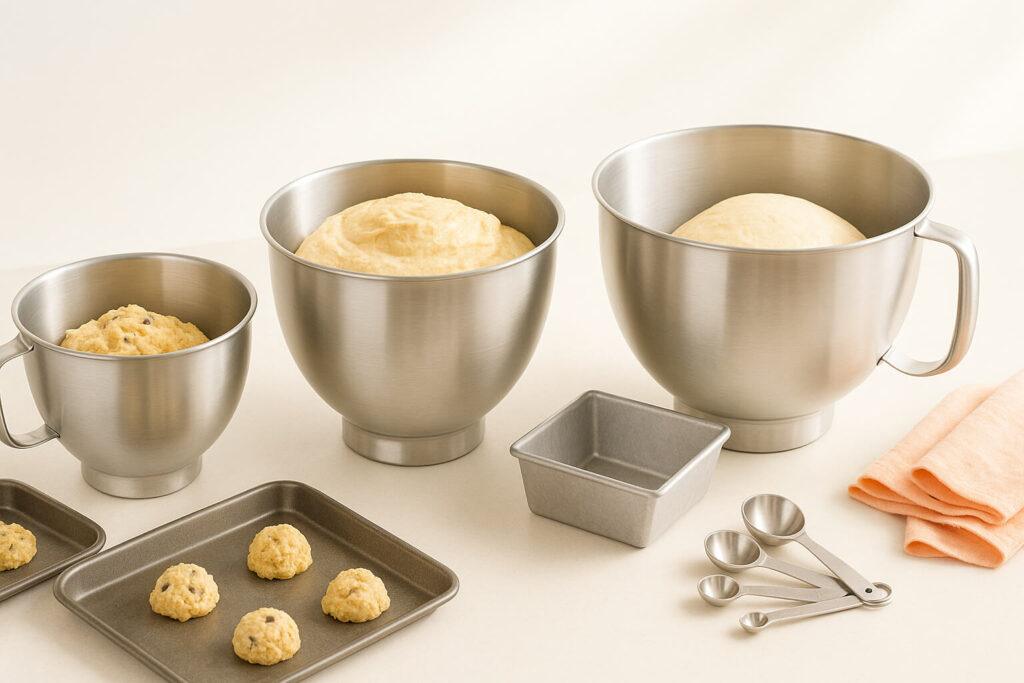
A smaller bowl is:
- Easier to scrape and clean
- Great for single batches, small households, and everyday baking
- Less efficient for big holiday bakes or multiple loaves of bread
A larger bowl is:
- Better for doubling or tripling recipes
- More comfortable for heavy doughs and big batches
- Less efficient for tiny amounts (one egg white or very small batters can get “lost” at the bottom)
Too small a bowl, and you’re fighting flour clouds, batter creeping up the beater, and dough trying to climb out when you scale up. Too big, and you may find small batches don’t mix evenly unless you stop and scrape more often.
If your kitchen is tight and you mostly bake in small batches, a compact mixer with a smaller bowl can actually be the better match. There are more ideas in Top Mini Stand Mixers for Small Kitchens.
4. Accessories & Materials
For many people, the appeal of a KitchenAid mixer isn’t just the bowl; it’s the attachments, too.
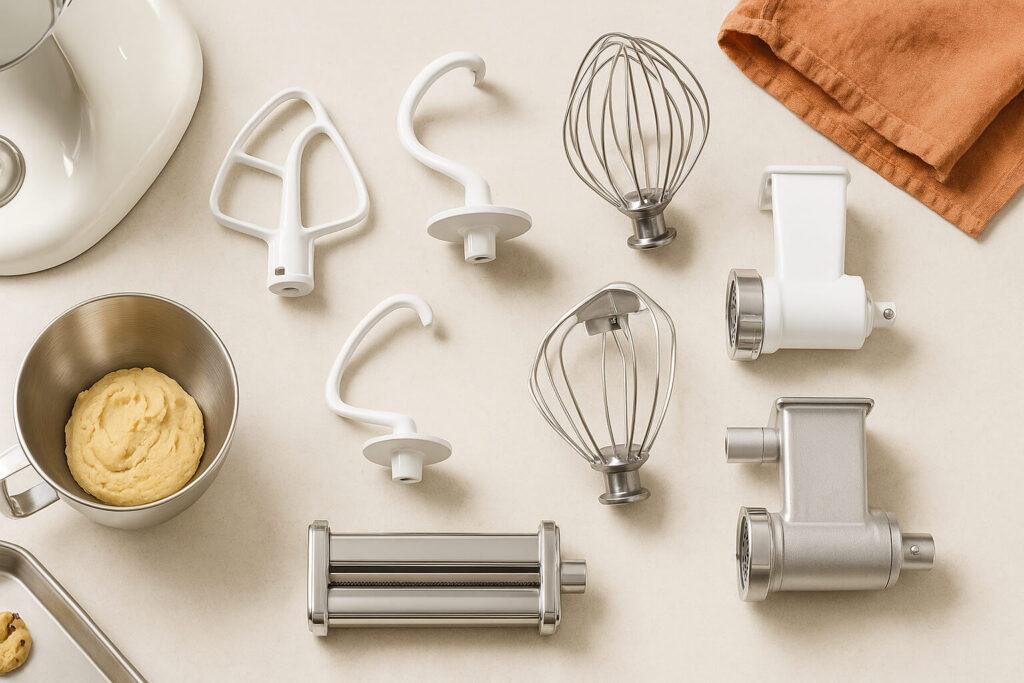
KitchenAid stand mixers have a front power hub for other attachments, which means you can turn a stand mixer into:
- A pasta roller and cutter
- A meat grinder
- A veggie slicer or spiralizer
- A grain mill, and more
Where models differ is mainly in:
- What you get in the box
- Some include a pouring shield, flex edge beater, or extra bowl; others don’t.
- Materials
- Stainless vs coated beaters
- Stainless vs glass vs non-stick bowls
If pasta is high on your list, you can go deeper in: KitchenAid Attachments for Pasta – A Complete Review & Buyer’s Guide
5. Speed Settings
On paper, most models have similar numbers of speeds (about 10–11). What matters is how you use them.
Roughly:
- Lower speeds (stir–2):
- Starting doughs and batters without flour clouds
- Folding in chocolate chips, nuts, or fruit
- Middle speeds (3–6):
- Most cake, muffin, and cookie batters
- Every day creaming and mixing
- Higher speeds (7–10):
- Whipped cream
- Meringue
- Light, fluffy frostings
Some newer bowl-lift models add a “½” speed for extra-gentle starts on heavy doughs.
For a more detailed speed-by-speed guide, see: KitchenAid Mixer Speeds Guide .
6. Size, Footprint & Weight
Tilt-heads (especially the Mini and Classic) are:
- Shorter and generally lighter
- Easier to move or store
- Better if you need to slide the mixer in and out of a cabinet
- More forgiving on shallow or not-quite-full-depth counters
Bowl-lifts (5.5, 7, 8 qt):
- Tall, heavy, and happiest when they live in one spot
- May not fit under very low cabinets, especially when the bowl is raised
- Ideal if you have a dedicated baking zone and want a “leave it out” machine
If you’re deciding between a Mini, a Classic, and a big bowl-lift, it’s worth asking:
- Do I have a spot where this can stay, or will I lift it every time?
- How much weight am I realistically willing to move it regularly?
7. Overload Protection & Durability
Two “not-obvious” things matter a lot over the life of your mixer: how it handles overload, and how it holds up to years of use.
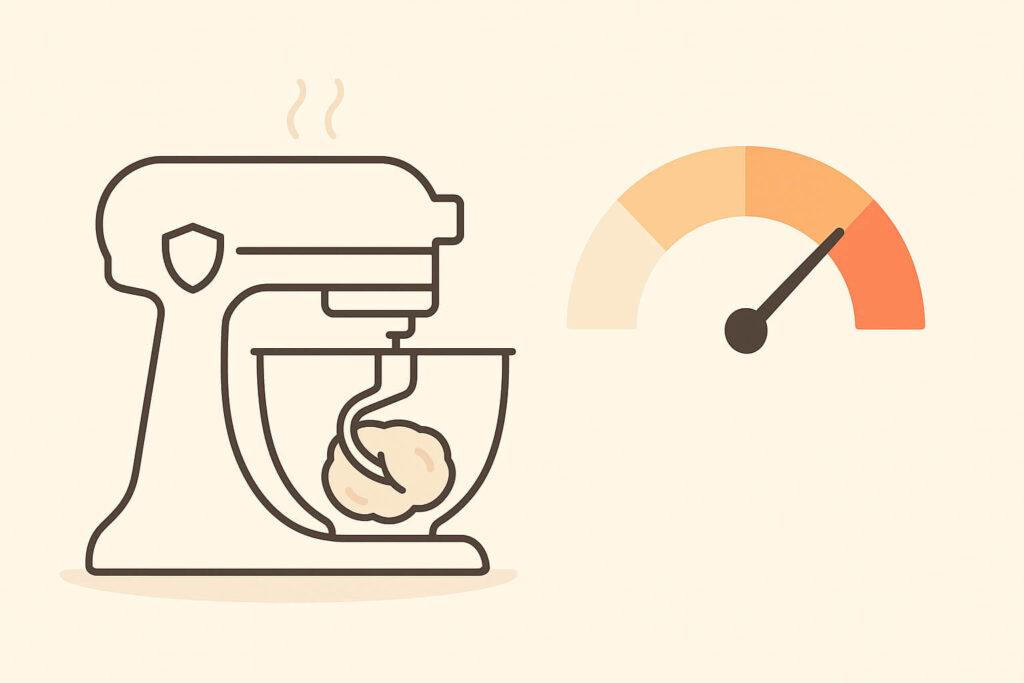
What overload protection is (in plain language)
Overload protection protects the mixer’s motor when you push it too hard with too much dough, use too stiff a dough, or run it for too long. Depending on the model, this can happen:
- A gear or mechanism that slips before the motor destroys itself
- An internal part designed to fail first (cheaper to fix than a burned-out motor)
- The mixer is slowing, shutting off, or refusing to restart until it cools down
It’s not a free pass to abuse the mixer, but it can save the motor if you accidentally overload it.
Warning signs you’re asking too much of your mixer:
- A burning smell from the motor area
- A high-pitched whine instead of a steady hum
- The mixer is slowing down a lot or straining under load
- The head or bowl is bouncing or wobbling more than usual
If you’re not sure whether you’ve crossed the line, this guide walks through the symptoms and what to do next: Signs Your Stand Mixer Is Overloading (And How to Prevent Burnout)
8. Durability
KitchenAid mixers are built to last, but heavy dough, frequent use, and the occasional bump can still cause:
- Wobble in the head or bowl
- Grease leaking from the hub area
- New grinding, clunking, or rattling sounds
When something feels “off,” this guide can help you decide whether it’s normal, DIY-fixable, or time for a repair shop: KitchenAid Mixer Troubleshooting.
Understanding overload protection and basic warning signs makes it much easier to pick a mixer that matches your baking load—and to keep it running well once you bring it home.
With those key features in mind, the charts aren’t just numbers anymore—you can see how design, power, bowl size, and durability actually play out in real baking.
Next, let’s pull it all together with a class-by-class breakdown, so you can quickly match each KitchenAid mixer family to your space, your recipes, and how often you bake.
Model-by-Model Breakdown
Here’s a simple, practical breakdown of each KitchenAid mixer model:
3.5-QT Artisan Mini: Best for Small Kitchens & Light Baking
Compact and lighter, the Mini is made for small spaces and smaller households.
Best fit if you:
- Bake for 1–3 people
- Mostly make cookies, cupcakes, loaf cakes, muffins, and whipped cream
- Have a small or apartment kitchen
Typical batch limits (per KitchenAid):
- Up to 5 dozen cookies in one batch
- Best for small bread batches (about 1–2 loaves, roughly 3–4 cups of flour total)

See KitchenAid Artisan Mini Review for complete details.
4.5-QT Classic: Entry-Level Everyday Mixer
The Classic is for typical family baking.
Best fit if you:
- Want KitchenAid performance on a tighter budget
- Bake regularly (cookies, cakes, simple breads) but not in huge batches
- Don’t need extras like fancy finishes or multiple bowls
Typical batch limits (per manufacturer descriptions):
- Up to 6–8 dozen cookies in one batch
- Up to about 3 loaves of bread per batch
- Roughly up to 8 cups of all-purpose flour for dough (tilt-head limit)
Comparing it directly with the Artisan? Start here: KitchenAid Classic vs Artisan.
Or, see the full review of the KitchenAid Classic Stand Mixer.

4.5-QT De Luxe: A Step Up from the Classic
The De Luxe keeps the same 4.5 qt size but adds a bit more muscle and a handled bowl.
What you gain vs Classic:
- 300-watt motor (vs 275 watts on the Classic)
- 4.5 qt stainless steel bowl with handle, easier to hold and scrape
Best fit if you:
- Like the Classic’s footprint but bake a little more often
- Want that handled bowl plus a modest power bump
- Still don’t need a full 5 qt Artisan
Typical batch limits (per KitchenAid / retailers):
- Up to 8 dozen cookies in one batch
- Bread capacity is similar to the Classic: roughly up to 3 loaves in one go (light to medium doughs)
5-Qt Artisan: The Popular All-Rounder
The 5 qt Artisan is the go-to “one mixer for almost everything” in many homes.
Best fit if you:
- Bake multiple times a month or week
- Often double cookie recipes or make big bowls of frosting
- Want more colors and bundle options
Typical batch limits (per KitchenAid):
- Up to 9 dozen cookies in one batch
- Up to about 4–4.5 loaves of bread per batch
- Up to 9 cups of all-purpose flour in dough recipes
For more details, see: KitchenAid Artisan 5 Qt Review.
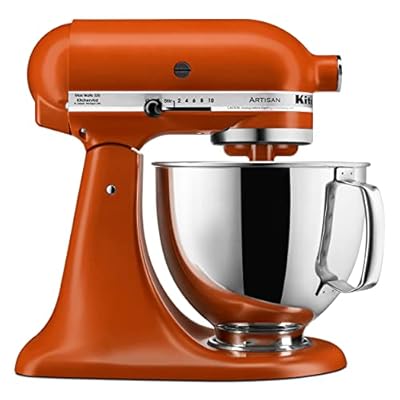
5.5-Qt Bowl-Lift: The Bridge Mixer
The 5.5 qt bowl-lift takes you into sturdier, higher-capacity territory without going full “pro.”
Best fit if you:
- Make bread, brioche, or heavy dough on a regular basis
- Bake bigger batches for family, potlucks, or school events
- Want the stability of a bowl-lift, but not the size of a 7 or 8 qt
Typical batch limits (per KitchenAid):
- Up to 11 dozen cookies per batch
- Kneads over 7 lbs of bread dough in one go (roughly 6–7 loaves, depending on recipe)
7-Qt Bowl-Lift: For the Home Baker Enthusiast/Side Hustler
This is the “I bake a lot” mixer: big capacity and strong motor for frequent use.
Best fit if you:
- Make bread or dough several times a week
- Batch bake for a cottage food business or a large extended family
- Want something that stays solid with heavy dough and large mixes
Typical batch limits (per KitchenAid):
- Up to 13 dozen cookies per batch
- Kneads over 8.5 lbs of bread dough (roughly 7–8 loaves, depending on recipe)
For bread-heavy baking, also see:
- Best Dough Mixers for Bread → /best-dough-mixers-for-bread/

Get the complete details in KitchenAid 7-quart Stand Mixer Review.
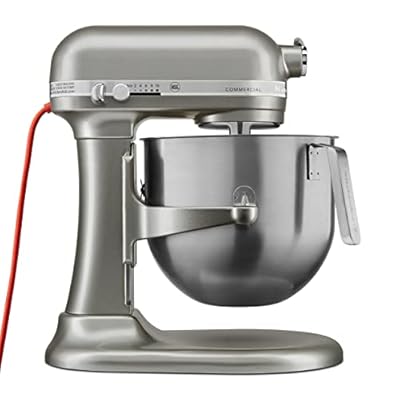
8- Qt Commercial: For Tiny Bakeries & Heavy Use
The 8-qt Commercial is designed for long, frequent, demanding use. It’s more “small shop” than casual home baking.
Best fit if you:
- Mix large, heavy batches regularly
- Need NSF / commercial ratings for your workspace
- Prefer a machine built for continuous work
Typical batch limits (per KitchenAid / reviews):
- Up to about 13 dozen cookies per batch
- Handles 8+ pounds of dough (around 8 or more loaves, depending on formula)
By now, you’ve seen what each KitchenAid stand mixer model can handle, and which ones match how much you actually bake.
Next, it’s time for the big-picture question: is a KitchenAid stand mixer worth the money, and how long can you realistically expect it to last?
Longevity and Value: Are KitchenAid Stand Mixers Worth It?
When people ask “is a KitchenAid stand mixer worth it?” they’re usually asking two things:
- How long do KitchenAid stand mixers last?
- Will I actually use it enough to justify the price?
Let’s tackle both.
How Long Do KitchenAid Stand Mixers Last in Real Life?
KitchenAid has been making stand mixers since 1919, so we’re not talking about a new, untested brand.
Officially:
- Most markets get around a 1-year full/limited warranty on stand mixers.
- Some regions (like Australia) list up to 5 years on parts and labour for stand mixers.
Practically, though:
- Third-party sources and appliance writers often quote 10–15 years as a realistic average lifespan with normal use and care.
- Plenty of owners report mixers still running well after 20–40+ years, especially if they’re cleaned, not overloaded, and regreased or serviced occasionally.
So if you treat it well (no constant overload, basic maintenance, reasonable duty cycles), it’s fair to expect many years—often a decade or more—of use from a KitchenAid mixer, not just a season or two.
I’ve had my Professional 600 for 11 years now, and it still runs fine.
When Are KitchenAid Mixers Worth It?
KitchenAid mixers make the most sense if you:
- Bake regularly, not just once or twice a year
- Use it for a variety of tasks: creaming, whipping, kneading, shredding, maybe even attachments
- Value:
- A solid, mostly metal build
- Long-term durability
- A big ecosystem of bowls and attachments
In that context, are KitchenAid stand mixers worth it?
For a lot of home bakers, yes, because the cost is spread over years of loaves, cakes, cookies, and dough. And you’re also buying into a platform: bowls, beaters, and attachments that can move with you if you upgrade within the brand.
When Is a KitchenAid Not Worth It?
There are also situations where KitchenAid mixers aren’t worth it:
- You bake only a few times a year, and mostly simple recipes
- Your budget is tight, and you won’t use most of the mixer’s capabilities
- You mainly want a bread-only or very heavy dough machine and don’t care about attachments or looks
- Your kitchen is small, even the Mini feels like too much.
In those cases, a lighter-duty mixer or a different brand may make more sense, and will leave more budget for ingredients, pans, or a better oven.
For a broader look at how KitchenAid compares to other brands at different budgets and baking styles, you can check:
So… Is a KitchenAid Stand Mixer Worth It for You?
A simple way to decide:
- If you bake at least a few times a month, want a machine that can handle everything from whipped cream to bread dough, and plan to keep it for years → a KitchenAid is very likely worth it.
- If you bake rarely, mostly small or simple recipes, and don’t care about attachments or aesthetics → you may be happier with a basic, cheaper mixer.
In other words, KitchenAid is a long-term tool, not a seasonal gadget. If you’ll actually use what it can do—and keep it for the long haul—it usually earns its place (and its price) on your counter.
Wondering where KitchenAid’s iconic stand mixers are made? Let’s discuss that next.
Where Are KitchenAid Mixers Made & Who Makes Them?
When you’re about to drop serious money on a mixer, it’s totally fair to ask things like “where are KitchenAid stand mixers manufactured?” and “who actually makes KitchenAid mixers?”
Let’s break that down.

Who Makes KitchenAid Mixers?
- Brand: KitchenAid is an American appliance brand.
- Owner: It’s owned by Whirlpool Corporation, a large U.S.-based appliance company.
- Origins: KitchenAid started in 1919, originally under the Hobart Manufacturing Company, with its first stand mixer models.
So if you’re wondering who makes KitchenAid mixers today, the short answer is:
KitchenAid is a Whirlpool-owned brand, and Whirlpool oversees the design and production of modern KitchenAid stand mixers.
Where Are KitchenAid Stand Mixers Manufactured?
For stand mixers, the “where is KitchenAid mixers made” question has a pretty clear answer:
- All KitchenAid stand mixers are assembled in a dedicated factory in Greenville, Ohio, USA.
- The die-cast metal parts and components are sourced from various manufacturing plants in other countries, then brought to Greenville for assembly.
So:
If you own a KitchenAid stand mixer—even if you bought it outside the U.S.—it was assembled in Greenville, Ohio, using a mix of U.S. and imported parts.
Other KitchenAid products (dishwashers, some small appliances) are made in different locations in the U.S., Canada, and China, but the iconic stand mixers all trace back to that Ohio factory.
If you like brand stories, KitchenAid has a nice timeline of its history and design evolution here: Brand history.
Why Are KitchenAid Mixers So Expensive?
We already touched on performance and motors earlier, but manufacturing and history are part of the price, too.
A few reasons KitchenAid mixers sit at a higher price point:
- U.S. assembly:
Assembling all stand mixers in one U.S. factory (Greenville, Ohio) instead of chasing the absolute lowest labor cost adds to the final price—but also to quality control and consistency. - Metal build and long life:
Stand mixers use heavy, die-cast housings and metal gearing in key places. They’re designed as long-term appliances, not seasonal gadgets—which costs more up front, but helps them last for many years. - Attachment ecosystem:
Since the 1930s, “Model K,” KitchenAid has kept the same basic attachment hub design, so many modern attachments still work across generations. That cross-compatibility and ongoing ecosystem is part of what you’re paying for. - Brand and design heritage:
The stand mixer’s silhouette is a registered trademark and has even been featured as an icon of American industrial design. That “design object” status, plus more than 100 years of brand history, helps keep KitchenAid in the premium tier.
Put together, that’s why KitchenAid usually costs more than basic stand mixers: U.S. assembly, durable materials, a long track record, and a big ecosystem of attachments and colors.
From a look at back at history, let’s turn the last piece into a clear decision for you.
How to Choose: Which KitchenAid Stand Mixer Is Best for Me?
By now, you’ve seen the class overview and the tilt-head vs bowl-lift charts (Sections 2 & 3), plus the key features that actually affect your baking. This section is where you turn all of that into a clear choice.

Use these five questions as a simple filter to decide which KitchenAid mixer you should get.
Question 1: How often do I bake—and what do I make most?
Be brutally honest with yourself here.
- A few times a month, mostly cakes, cookies, and muffins?
- Tilt-heads like the Mini, Classic, De Luxe, or Artisan make the most sense.
- Several times a week, including bigger projects and holiday baking?
- The 5 Qt Artisan or 5.5 Qt bowl-lift gives you more headroom.
- Multiple times a week, often with big batches or for other people (orders, events, side hustle)?
- The 7 Qt or 8 Qt Commercial starts to earn its higher price and size.
👉 Go back to the charts in Section 2 and check the “Best For” and batch size rows to see which class lines up with how you actually bake; not how you wish you baked.
Question 2: How many people am I baking for, and what batch size feels “normal”?
Think about a typical bake, not the once-a-year Christmas marathon.
- 1–3 people / small household:
- Single batches of cookies, one loaf cake, one or two loaves of bread
- The 3.5 Qt Mini or the 4.5 Qt Classic / De Luxe is plenty.
- Family + guests/kids / regular sharing:
- Double cookie batches, larger cakes, party desserts
- The 5 Qt Artisan or 5.5 Qt bowl-lift handle this comfortably.
- Extended family/customers/events:
- Double and triple batches as your normal
- The 7 Qt or 8 Qt Commercial is built for that rhythm.
👉 Re-check the bowl capacity and max typical batch rows in the charts. If your “normal” is already near the top of a class’s limit, move up one class so you’re not constantly maxing it out.
Question 3: What kind of kitchen and counter space am I working with?
This is where “on paper” specs meet real life.
- Small, apartment, or shared kitchen:
- Limited counter depth, low cabinets, or no spot to leave a mixer out
- The Mini or a tilt-head in the 4.5–5 qt range is usually more realistic.
- Roomy kitchen or dedicated baking corner:
- Full-depth counters, open space under cabinets
- A bowl-lift (5.5, 7, or 8 qt) becomes much more practical.
Ask yourself:
- Will this stay on the counter or in a cabinet?
- Am I okay lifting 20–30 lb regularly?
👉 Use the dimensions and weight rows in the charts to sanity-check whether your dream mixer actually fits your space and your back.
Question 4: How bread-heavy is my baking?
Bread is where motor strength, bowl size, and stability really matter.
- Mostly cakes, cookies, and occasional bread:
- Tilt-heads like the Classic, De Luxe, or Artisan are designed for this mix.
- Regular yeast bread, brioche, babka, enriched doughs:
- The 5.5 Qt bowl-lift is a strong middle ground.
- Frequent, heavy bread baking / multiple loaves at a time:
- The 7 Qt and 8 Qt Commercial are built to live in that world.
If dough is the main character in your baking, it’s worth choosing a class with:
- Higher wattage / stronger motor
- Bowl-lift design
- Larger bowl capacity
👉 Revisit the power & motor and max typical batch rows in the charts, then cross-check with your reality: how many loaves or dough batches you actually make in a normal month.
Question 5: What’s my realistic budget—and do I care about colors, bundles, and attachments?
Finally, match the practical stuff.
- Lower budget, still want a KitchenAid:
- 4.5 Qt Classic or 4.5 Qt De Luxe
- Mid-range budget, want flexibility and color choices:
- 5 Qt Artisan
- Higher budget, serious baking, or side hustle:
- 5.5 Qt, 7 Qt, or 8 Qt Commercial bowl-lifts, depending on volume
Also think about:
- Do I plan to buy attachments (pasta, grinder, slicer)?
- Does color matter to me, or will a basic finish do?
- Would an extra bowl or flex-edge beater make it easier to bake?
The charts and model-by-model breakdown can help you see where each model stands on the budget vs. capability spectrum. If you walk through these five questions with the charts open, the choice usually narrows down to one or two clear candidates, the ones that fit your baking habits, your kitchen, and your budget, instead of just your Pinterest board.
Stop Scrolling. Start Baking.
When you first started shopping for a KitchenAid, it probably felt like walking into a noisy store: tabs everywhere, model numbers everywhere, and everyone shouting a different “best.”
Now the noise is quieter.
You’ve seen the models side by side. You know what those bowl sizes mean for cookies, cakes, and bread. You understand why some mixers stay steady with heavier dough, and why others strain.
And here’s what that decision buys you:
A Saturday bake where your mixer is already on the counter. You double the cookie dough without drama. Bread dough kneads while you sip coffee and clean as you go.
Holiday baking feels planned, not panicked. Weeknight cupcakes happen because it’s easy.
You don’t need a “perfect” mixer. You need one that fits your space, your recipes, and your rhythm.
Before you close this tab, take one small step: scan the charts, run the five questions, and circle 1–2 models that feel right. That’s your shortlist.
You’ve done the homework. Now you get to stop comparing and start baking.
KitchenAid Mixer Comparison FAQs
Q: Which KitchenAid stand mixer is best for home use?
A: For most home bakers, the 5 qt Artisan is the best all-rounder. It has enough power and bowl size for regular cakes, cookies, and bread, without jumping into pro-level bulk.
Q: Is a KitchenAid stand mixer worth it?
A: It’s usually worth it if you bake at least a few times a month and plan to keep it for years. You’re paying for a solid build, strong motor, and a mixer that can handle many different tasks.
Q: How long do KitchenAid stand mixers last?
A: With normal use and basic care, many KitchenAid stand mixers last 10–15 years or more. Some keep going for several decades.
Q: What’s the difference between tilt-head and bowl-lift mixers?
A: Tilt-head mixers are smaller, lighter, and easier to access for everyday baking. Bowl-lift mixers are taller, heavier, and better for frequent bread and large batches because they’re more stable under load.
Q: Which KitchenAid mixer is best for bread?
A: Occasional bread is fine in the Classic or Artisan, but if you bake bread often or in big batches, a 5.5 qt, 7 qt, or 8 qt bowl-lift is a better choice.
Q: What size KitchenAid stand mixer do I need?
A: Small households and light baking can use 3.5–4.5 qt. Most families are happiest with 5–5.5 qt. Heavy bakers, bread lovers, and side hustles benefit from 7–8 qt.
Q: Where are KitchenAid stand mixers made?
A: All KitchenAid stand mixers are assembled in Greenville, Ohio, USA, using a mix of U.S. and imported parts.