
Notice: I receive compensation if you buy something through affiliate links on this post. This does not change the price you would pay. As an Amazon Associate I earn from qualifying purchases.
You shape the dough carefully.
The surface looks smooth.
The basket looks well-floured.
Then the dough sticks to the banneton anyway.
The dough tears during turnout.
The surface deflates.
The shape spreads before it even reaches the oven.
If you’re wondering why dough sticks to the banneton, the problem happened before the release.
KEY TAKEAWAYS
- Dough sticking to the banneton comes from excess surface moisture, weak surface tension, overproofing, or insufficient flouring.
- Rice flour creates a drier barrier than regular flour and releases dough more cleanly.
- Liners and shallow baskets hold more moisture around the dough surface.
- Higher-hydration dough releases more cleanly from deeper cane bannetons with better airflow.
- The basket supports the dough during final proofing, but it does not compensate for weak structure or overproofing.
What Dough Sticking Looks Like
Before fixing the problem, examine closely how the dough adhered. The way it behaves during turnout points to what happened during proofing, shaping, or moisture control.
The dough pulls away in wet strands
Instead of releasing cleanly, the dough stretches into sticky strands or leaves damp patches in the basket.
That means the surface was too wet. The flour barrier broke down, and the dough bonded to the basket fibers during proofing.
High hydration, trapped moisture, or too little flour on the basket surface cause this.
The loaf tears during turnout
Sometimes one part of the loaf releases while another section stays stuck.
The surface pulls, tears, and deflates as the dough comes out. Once the outer skin breaks, trapped gas escapes and the loaf loses strength quickly.
You’ll often see:
- torn patches
- ragged edges
- uneven deflation
- flattened sections on one side
The dough releases but spreads immediately afterward
Sometimes the loaf comes out of the banneton but relaxes outward right away.
That points to weakened surface tension. Even partial sticking can damage the outer skin enough to reduce support.
The loaf may bake flatter, spread wider, or struggle to open well at the score.
Flour patches disappear during proofing
Dry flour patches should still be visible after proofing.
If they disappear completely, moisture overruns the flour barrier.
The flour hydrated into a sticky paste instead of staying dry enough to separate the dough from the basket.
This happens with:
- very wet dough
- overproofed dough
- trapped condensation
- regular flour instead of rice flour
WHAT THE STICKING IS TELLING YOU
Most banneton sticking comes from excess surface moisture or weak dough structure. Wet strands, disappearing flour, and torn surfaces all point to moisture overwhelming the flour barrier during proofing.
If the loaf spreads or deflates after turnout, the outer skin lost strength before baking. High hydration, trapped condensation, weak surface tension, overproofing, and insufficient flouring are the most common causes.
Why Dough Sticks to the Banneton
Dough sticks when too much surface moisture breaks down the flour barrier between the dough and the basket.
Dough hydration, surface tension, and proofing strength all affect how cleanly the loaf releases.
But the banneton, flouring, and proofing setup also affect how much moisture stays trapped on the surface.
The dough surface is too wet
Very wet dough carries more free moisture to the surface over time.
That moisture gradually hydrates the flour barrier and softens the outer skin, especially during long cold proofing.
Wet dough sticks faster because the surface is moist throughout proofing.
As moisture builds on the surface, the flour barrier breaks down and the dough bonds to the basket fibers.
High hydration increases the risk, but moisture also builds from condensation and migration during proofing.
Even dough that felt manageable during shaping can become stickier after several hours in the basket.
If the dough looks shiny, absorbs flour quickly, or leaves damp patches inside the basket after turnout, the surface is carrying too much moisture.
If your dough is sticky throughout mixing, shaping, and proofing, this guide on Dough Too Wet explains how hydration affects dough handling and structure
The dough lacks surface tension
A weakly shaped loaf spreads outward in the basket instead of holding a tighter, supported shape. That increases surface contact between the dough and the banneton.
As the dough relaxes, softer sections settle deeper into the grooves, making release harder during turnout.
If the dough spreads during shaping, feels slack instead of taut, or relaxes outward quickly after turnout, the outer structure was too weak before proofing.
If your loaf loses shape before baking, Why Dough Spreads Instead of Rising walks through the most common causes of structure and shaping.
Bannetons help support dough during final proofing so the loaf rises instead of spreading outward.
The dough is overproofed
Overproofed dough becomes softer, weaker, and stickier as gluten strength breaks down during fermentation.
The surface absorbs moisture more easily, elasticity drops, and the outer skin tears easily during release.
If the dough feels fragile, keeps a deep indentation after poking, or deflates easily during handling, overproofing weakened the structure before baking.
If you are unsure whether the dough is overproofed, this side-by-side guide compares the handling and visual signs of underproofed vs overproofed dough.
The wrong flour was used for dusting
Regular flour absorbs moisture quickly. During proofing, it hydrates into a sticky paste that bonds the dough to the basket surface.
Rice flour stays drier and creates a cleaner separation layer between the dough and the banneton.
Because rice flour contains less gluten and absorbs moisture differently than wheat flour, it stays powdery longer instead of becoming sticky on the dough surface.
That helps reduce surface bonding and improves release during turnout.
King Arthur Baking also recommends dusting bannetons thoroughly with flour before proofing, especially along the basket surface.
The banneton traps too much moisture
Some bannetons retain more moisture on the surface of the dough during proofing.
Basket material, airflow, groove depth, and liners all affect how much moisture gets trapped around the dough.
Shallow grooves create more surface contact, while liners reduce airflow and hold humidity closer to the dough.
These differences become more noticeable with wetter dough, long cold proofing, softer sourdough, and weaker surface tension.
When moisture cannot escape easily, the dough surface softens and sticks to the basket during proofing.
WHY DOUGH STICKS
Dough sticks when surface moisture breaks down the flour barrier between the dough and the basket.
The most common causes are high hydration, weak surface tension, overproofing, trapped condensation, and using regular flour instead of rice flour. The banneton itself can also hold too much moisture against the dough surface during proofing.
When the Banneton Is Part of the Problem
Not all bannetons handle wet dough equally well.
Some baskets work fine for lower-hydration dough but struggle once your dough becomes softer, wetter, or more heavily fermented.
Basket material, airflow, groove depth, and side support all affect how cleanly your dough releases.
Cane vs Pulp Bannetons
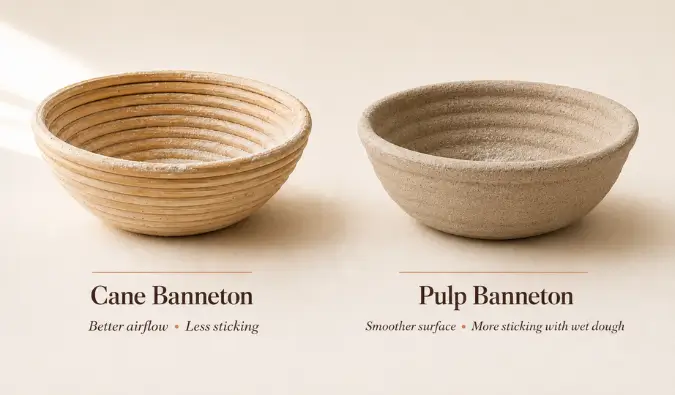
If you work with wetter dough, cane bannetons release more cleanly.
Cane baskets allow more airflow, which helps dry the dough surface slightly during proofing.
Their textured grooves also reduce the amount of dough that stays pressed against the basket.
Pulp bannetons hold moisture longer and have smoother surfaces. They are easier to maintain, but wet dough sticks more.
Cane vs Pulp Bannetons
| Feature | Cane Banneton | Pulp Banneton |
|---|---|---|
| Airflow | Higher | Lower |
| Surface drying | Better | Slower |
| Sticking tendency | Lower | Higher |
| Surface texture | Textured grooves | Smoother |
| Maintenance | Needs drying/brushing | Easier cleanup |
| Best for | Wet artisan dough | Moderate hydration dough |
If your dough regularly sticks during cold proofing or high-hydration bakes, a rigid cane banneton performs better.
Liner vs No Liner
A liner gives the dough a smoother surface and makes cleanup easier, but it also traps more moisture during proofing.
Liners work best with moderately hydrated dough, enriched dough, or dough with strong surface tension.
With wetter dough, they often increase sticking, especially during long cold proofing or when condensation builds around the surface.
For high-hydration sourdough, a well-floured cane banneton releases more cleanly than a liner.
Shallow vs Deep Spiral Grooves
Deep grooves reduce sticking because less dough surface presses against the basket.
Shallow grooves create more surface contact, so soft dough grips the basket easily. You will notice the difference most with wet dough, long fermentation, or a weaker structure.
Basket Size Affects Release Too
If the banneton is too large, the dough spreads outward instead of holding its upward structure during proofing.
That wider spread increases surface contact along the basket walls and raises the chance of sticking.
If the proofed loaf looks flattened, spreads along the sides, or sticks on the walls during turnout, the basket may be too large for the dough.
A properly sized banneton supports the loaf while limiting unnecessary surface contact.
Banneton Features That Help Wet Dough Release More Cleanly
If your dough regularly sticks during proofing, the basket itself may be part of the problem.
For wetter or high-hydration dough, look for:
- good airflow
- rigid side support
- natural cane texture
- deeper grooves
- strong shape retention
These features help the dough surface dry slightly during proofing while still supporting the loaf underneath.
Rigid cane bannetons release wet dough better than smoother pulp baskets because the grooves reduce surface contact and allow better airflow.
Bannetons That Help Wet Dough Release More Cleanly
If your dough keeps sticking or spreading during proofing, the basket itself may be part of the problem. Look for good airflow, rigid side support, natural cane texture, and deeper grooves.
| Banneton | Best For | Why It Helps | |
|---|---|---|---|
 | 9-Inch Round Cane Banneton with Removable Liner | Standard sourdough boules | Bare cane improves airflow and release, while the removable liner gives flexibility for different dough styles. |
 | 10-Inch Oval Cane Banneton with Deep Grooves | Soft batards | Taller walls and deeper grooves help reduce outward spread and sticking along the sides. |
 | Pulp Bannetons with Linen Liners | Moderate-hydration dough | Easier to maintain and works well when the dough surface is not overly wet or tacky. |
How to Stop Dough From Sticking to the Banneton
Most dough sticking is due to excess surface moisture, weak structure, or poor basket support. A few adjustments usually fix it.
Use Rice Flour Instead of Regular Flour
Rice flour stays drier during proofing, so the dough releases more easily than with regular wheat flour.
Dust the basket lightly but evenly, especially along the grooves and side walls. If your dough keeps sticking, switch to rice flour before adding more flour.
Build Stronger Surface Tension During Shaping
A tighter outer skin keeps the dough from relaxing and sticking to the basket during proofing.
Shape firmly, seal the seams well, and avoid leaving sticky patches exposed.
If the dough spreads quickly after shaping, strengthen it before proofing by developing more tension during shaping or adding another fold during bulk fermentation.
If the dough still feels loose after shaping, the gluten may need more development before proofing. This guide explains how long to knead dough with a stand mixer for a stronger structure and better dough support.
Reduce Hydration Slightly if the Dough Repeatedly Sticks
If your dough sticks every bake, the hydration may be too high for your flour or shaping strength.
Lowering hydration by just 2–3% often improves handling, shape retention, and clean release without drying the dough
Let the Dough Surface Dry Slightly Before Proofing
A wet outer surface sticks faster.
Let the shaped dough rest uncovered for a few minutes before placing it into the banneton.
During cold proofing, cover the banneton loosely to avoid trapping moisture and condensation in the dough.
If the surface looks shiny or damp before baking, excess moisture is part of the problem.
Letting the shaped dough sit briefly before proofing helps the surface dry slightly and reduces sticking.
Use the Basket Size That Properly Supports the Dough
If the basket is too large, the dough spreads outward and presses harder against the sides during proofing.
For most home sourdough baking, a 9-inch round or 10-inch oval cane banneton works well for standard artisan loaves without encouraging outward spread during proofing.
Choose a Banneton That Matches Your Dough Type
The right banneton depends on the dough you bake most often.
If you work with high-hydration sourdough, rigid cane baskets with deeper grooves release more easily.
Softer dough benefits from taller side walls that reduce spreading. Lower-hydration or beginner dough is often easier to manage with a liner.
Matching the basket to your dough style makes shaping, proofing, and releasing much easier.
When the Dough Finally Releases Cleanly
You notice the difference the moment you turn the dough out.
The loaf releases cleanly instead of dragging or tearing along the sides.
It holds its shape, the surface stays smooth, and the score opens more evenly in the oven.
Cleaner release comes from controlling moisture, building stronger surface tension, and using a banneton that properly supports the dough.
Start with one adjustment on your next bake.
Switch to rice flour, tighten your shaping, or change how you cold-proof your dough.
Once the dough releases cleanly, shaping, scoring, and oven spring are easier to control.
Mix it. Bake It.